History of Corn
- history
- agriculture
- culture
- food
From Wild Grass to Global Staple
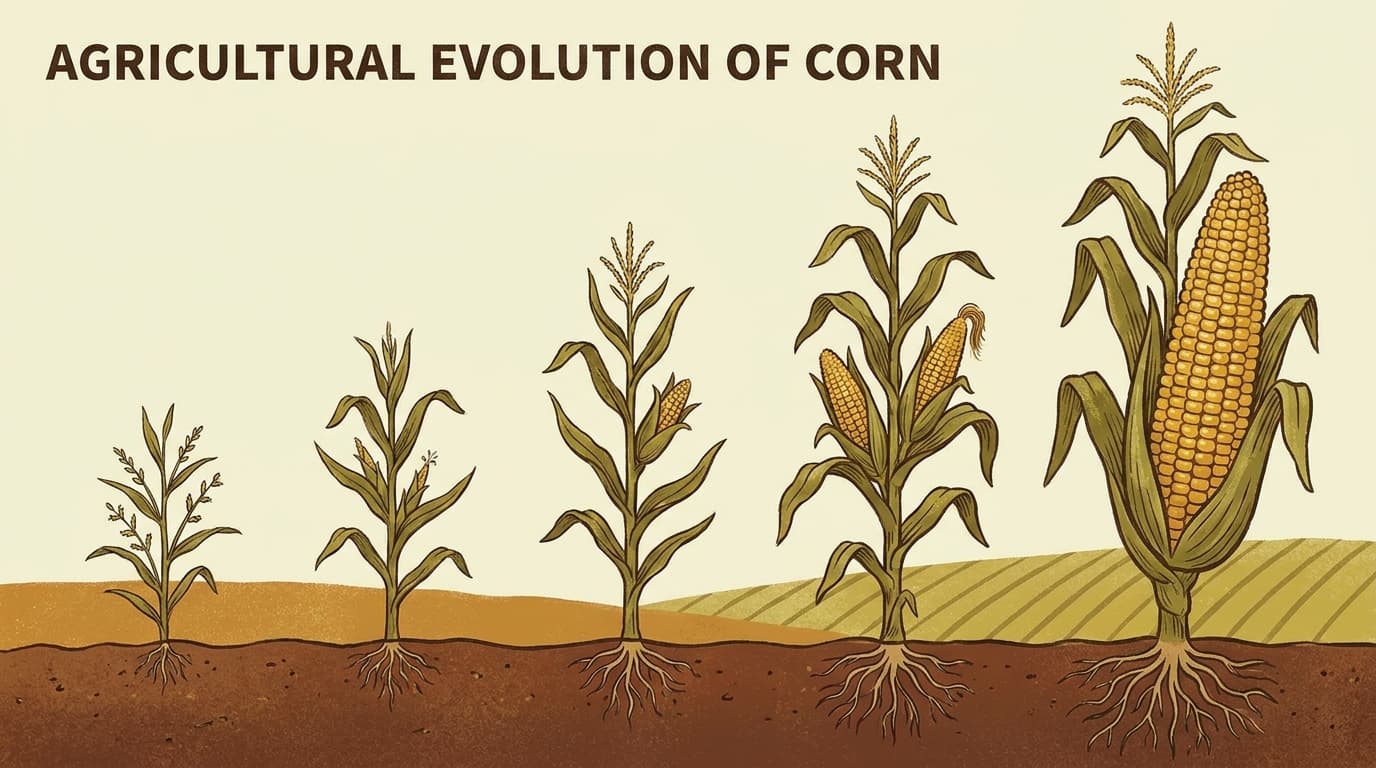
Corn — or maize, as most of the world calls it — is everywhere. You might eat it fresh on the cob, find it ground into flour, or see it in hundreds of processed foods. Yet this golden grain did not always exist in the form we know. Modern corn is descended from teosinte, a wild grass native to southern Mexico that was domesticated around 9,000 years ago.
Teosinte looks nothing like corn. Corn's wild ancestor is a grass called teosinte, which doesn't look much like maize, especially when you compare its kernels to those of corn. Early teosinte had tiny ears with only a few hard seeds encased in a tough shell. But ancient farmers in what is now Mexico saw potential in this unpromising plant. Through thousands of years of selective breeding — choosing which seeds to plant and replant — they transformed teosinte into the corn we recognize today.
The Mystery of a Dramatic Transformation
For a long time, scientists could not agree on corn's origins. The identity of maize's wild ancestor remained a mystery for many decades. While other grains such as wheat and rice have obvious wild relatives, there is no wild plant that looks like maize, with soft, starchy kernels arranged along a cob. Some even thought corn and teosinte were unrelated species.
Beadle calculated that only about 5 genes were responsible for the most-notable differences between teosinte and a primitive strain of maize. Later genetic work confirmed this finding: just a handful of key genetic changes — not hundreds — created a radically different plant. These changes controlled traits like kernel size, how the seeds attach to the cob, and whether the plant grows as a single stalk or a bushy shrub.
Where and When Corn Was Born
Corn was first domesticated by native peoples in southern Mexico about 10,000 years ago. Modern corn is believed to have been derived from the Balsas teosinte (Zea mays parviglumis), a wild grass. The Balsas River Valley, in what is now the Mexican state of Guerrero, appears to be the birthplace.
Archaeological evidence supports this timeline. Stone milling tools with maize residue have been found in an 8,700 year old layer of deposits in a cave not far from Iguala, Guerrero. Slowly, generation by generation, farmers selected plants with larger kernels, softer seed coats, and cobs that held their seeds more firmly. By around 6,000 years ago, corn no longer resembled its wild ancestor.
The Spread Across the Americas
Cultivation of ancient corn quickly spread and was practiced throughout the Americas by 2500 BCE. From its origin in Mexico, corn moved in several directions. Within 1500 years maize reached S. America, but moved somewhat more slowly north, arriving in the US SW nearly 5000 years after domestication began.
Recent DNA studies have complicated the picture. Scientists used ancient DNA to show that while teosinte's first steps toward domestication occurred in Mexico, the process had not yet been completed when people first began carrying it south to Central and South America. In each of these three regions, the process of domestication and crop improvement moved in parallel but at different speeds. In other words, corn was still being improved in multiple places at once, not just in Mexico.
Maize made up less than 30 percent of people's diets in the area by 4,700 years ago, rising to 70 percent 700 years later. Maize was domesticated from teosinte, a wild grass growing in the lower reaches of the Balsas River Valley of Central Mexico, around 9,000 years ago. This shift — from a minor food to a dietary staple — happened remarkably fast and set the stage for complex civilizations.
Corn and Ancient Civilizations
Domesticated over the centuries, maize nourished the civilizations that became the mighty empires of the early Americas, including the Olmec (1200 to 400 BC, Mesoamerica), Maya (peaking about 250 to 950 AD in Mesoamerica), Aztec (about 1345 to 1521 AD, Mesoamerica), and Inca (about 1400 to 1533 AD, northwestern South America).
For the Maya, corn was sacred. According to the Popol Vuh, their holy book, the gods made human beings out of corn after earlier attempts with mud and wood failed. The Aztecs called corn centli, meaning "our mother" in their Nahuatl language. Corn was not just food — it symbolized life itself.
These societies developed advanced farming methods to maximize corn production. Native American tribes adopted different methods of growing corn, including the 'Three Sisters' agricultural system, where corn, beans, and squash were planted together in a symbiotic relationship. The tall corn stalks supported climbing beans, the beans added nitrogen to the soil, and the broad squash leaves shaded the ground and reduced weeds. This system is still admired today for its efficiency and sustainability.
The Aztecs, living on islands in Lake Texcoco, built chinampas — artificial islands made of mud and plant matter in shallow lake water. These "floating gardens" produced several corn harvests a year and fed hundreds of thousands of people in their capital, Tenochtitlan.
Nixtamalization: A Nutritional Breakthrough
One invention stands out in the history of corn: nixtamalization (from the Nahuatl word nixtamal). Ancient Mesoamerican people discovered that soaking dried corn kernels in water mixed with lime — not the fruit, but calcium hydroxide from burned limestone or shells — transformed the grain.
This process did several things: it softened the kernels, made them easier to grind, improved the flavor, and — most importantly — unlocked nutrients. Corn lacks certain amino acids and has niacin (a B vitamin) bound in a form the human body cannot easily absorb. Nixtamalization releases that niacin and makes the protein more complete. Without this step, people who rely heavily on corn can develop nutritional deficiencies.
Today, nixtamalization is still used to make masa, the dough for tortillas and tamales.
Two Names: Corn and Maize
In the United States and a few other English-speaking countries, we say "corn." Most of the rest of the world says "maize." Why the difference?
The word "maize" comes from the 1550s, from Cuban Spanish maiz, from Arawakan (Haiti) mahiz, the native name of the plant. In Europe it was formerly also called Turkey corn; like the fowl, this is from mistaken notions of its origin. When Christopher Columbus and other Spanish explorers encountered the grain in the Caribbean, the Taíno people called it mahiz. The Spanish kept the name as maíz, which became "maize" in English.
But the word "corn" has a much older history. In countries that primarily use the term maize, the word corn may denote any cereal crop, varying geographically with the local staple, such as wheat in England and oats in Scotland or Ireland. The usage of corn for maize started as a shortening of "Indian corn" in 18th-century North America. In Old English, "corn" simply meant "grain" or "seed." English colonists in North America called the crop "Indian corn" to distinguish it from their familiar European grains. Over time, Americans dropped "Indian" and used "corn" by itself, while international scientific usage favored "maize."
Corn Reaches the Rest of the World
When Columbus "discovered" America, there was no corn on board the Nina, Pinta or Santa Maria. Before 1492, no one living in Europe ate corn cakes, corn bread or corn pudding. They didn't know corn existed. Up to this time, corn grew only in the Americas.
Since its introduction into Europe by Christopher Columbus and other explorers and colonizers, corn has spread to all areas of the world suitable to its cultivation. Within a century of Columbus's voyages, corn had taken root in Spain, Portugal, Italy, and parts of Africa and Asia.
Corn had the biggest impact, altering agriculture in Asia, Europe, and Africa. It underpinned population growth and famine resistance in parts of China and Europe, mainly after 1700, because it grew in places unsuitable for tubers and grains and sometimes gave two or even three harvests a year. Corn could grow on marginal land where wheat or rice failed. It thrived in hot climates and cool highlands alike. This adaptability made it a lifesaver for millions.
The movement of corn from the Americas to Europe, Africa, and Asia — and the reverse flow of crops, animals, and diseases — is known as the Columbian Exchange, a term coined by historian Alfred Crosby in 1972.
Corn Today
Today, corn is the most-produced grain crop in the world, surpassing wheat and rice. Globally, corn is grown across six of the seven continents, occupying more than 20% of the land devoted to crop production. Total annual corn production is 50% greater than that of wheat or rice.
In the United States, most corn is not eaten directly by people. It becomes animal feed, ethanol fuel, corn syrup, cornstarch, and ingredients in thousands of industrial products. In Mexico and much of Central America, however, corn remains the dietary foundation — eaten as tortillas, tamales, atole (a warm drink), and pozole (a hearty soup).
Despite its global reach, corn is still genetically linked to those first farmers in the Balsas Valley 9,000 years ago. Every kernel of modern corn carries the legacy of that long partnership between people and plants.
Why Corn Matters
The story of corn is more than agricultural history. It is a story of human ingenuity and patience. Ancient farmers, without scientific tools or knowledge of genetics, engineered one of the most successful crops on Earth. They did it slowly, season by season, choosing the best seeds, observing, adapting.
Understanding more about the evolutionary and cultural context of domestication can give us valuable information about this food we rely on so completely and its role in shaping civilization as we know it. Corn shaped societies, fed empires, crossed oceans, and still feeds billions today. That is a history worth remembering.
Share
Test yourself
What wild grass is the ancestor of modern corn?
Sources
- A Brief History of Corn - From Domestication to 1995 | Pioneer® Seeds
- Evolution of Corn | Learn.Genetics - University of Utah
- Corn | History, Cultivation, Uses, & Description | Britannica
- Ancient DNA Continues To Rewrite Corn's 9,000-Year Society-Shaping History | Smithsonian Institution
- Maize - Wikipedia
- The Centuries-Long History of Corn Farming | Nebraska Corn
- Rethinking the Corny History of Maize | Smithsonian Magazine
- Maize History | UC Davis
- Ancient genetic engineers: How Mexico's Mesoamericans bred a tiny plant into corn | Mexico News Daily
- Teosinte and the domestication of maize | Earth@Home: Evolution
- Early isotopic evidence for maize as a staple grain in the Americas | UNM Newsroom
- Introduction to The Story of Corn | CampSilos
- Columbian exchange - Wikipedia
- Columbian Exchange | Diseases, Animals, & Plants | Britannica
- Maize - Etymology, Origin & Meaning | Online Etymology Dictionary
- Why Do We Call Maize Corn? | CulinaryLore
- Cultural history of maize | Earth@Home: Evolution
- Corn — MayaIncaAztec.com
- 3.1: The Impact of Discovery - The Columbian Exchange | Humanities LibreTexts
Related articles
The History of Chocolate
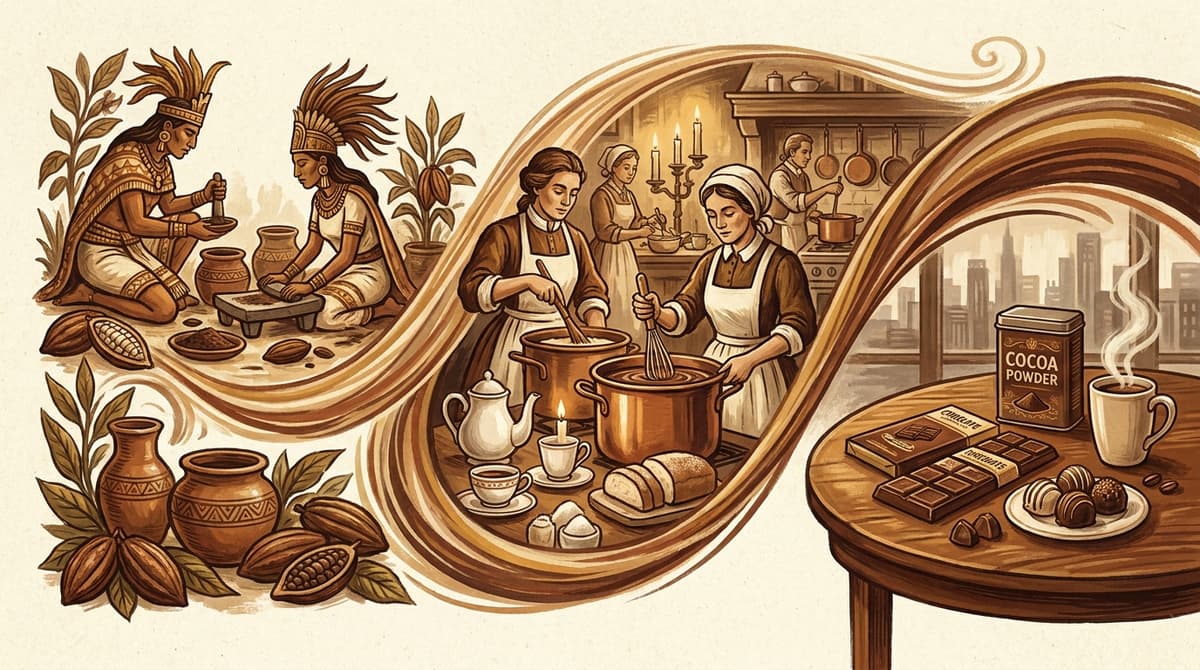
Discover how chocolate traveled from ancient Mesoamerican ceremonies to the modern candy bar, transforming from a bitter sacred drink into the sweet treat loved worldwide today.

The Ariel School UFO Incident: When 62 Children in Zimbabwe Saw Something Unexplained
In 1994, sixty-two children at a school in Zimbabwe reported seeing a silver craft land near their playground and beings emerge from it—a story that still divides believers and skeptics three decades later.
Bob Lazar and Area 51: The Story That Made a Secret Base Famous
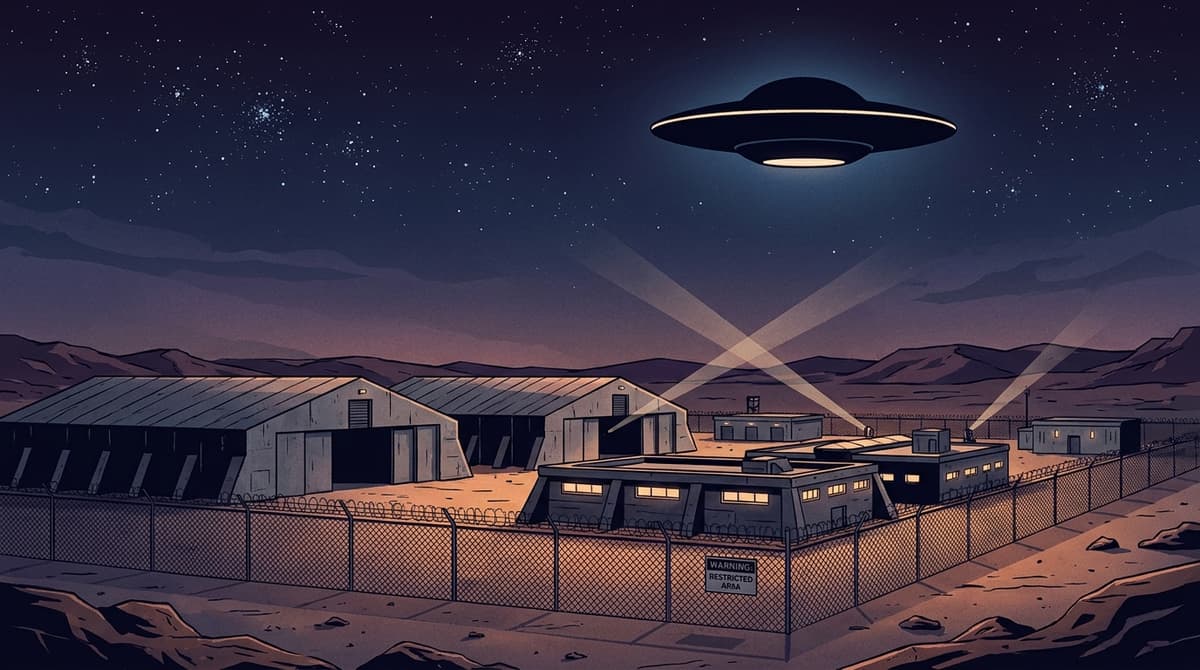
In 1989, a man named Bob Lazar claimed he worked on alien spacecraft at a secret U.S. government base. His story made Area 51 world-famous, but investigations found serious problems with his claims.