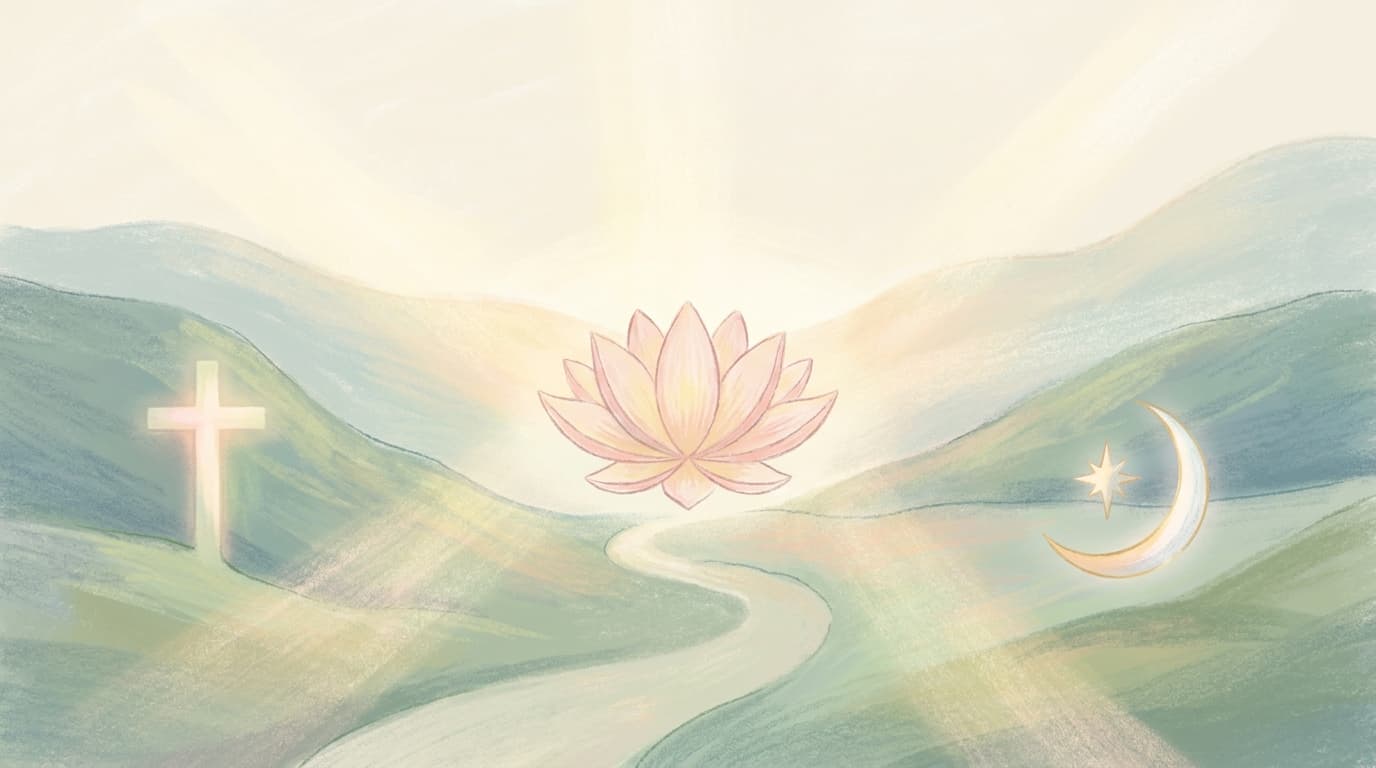
Life After Death: Beliefs, Science, and Questions
- religion
- philosophy
- spirituality
- death
What Is the Afterlife?
The afterlife (also called ) is a concerning existence after death, in which the essential part of an individual's stream of consciousness or identity continues to exist after the death of their physical body. For thousands of years, humans have wondered what happens when we die. In nearly every place surveyed, half or more say life after death is likely. Yet belief in the afterlife takes many forms across the world's religions and philosophies.
Major Religious Perspectives
Christianity
Christianity provides a clear distinction between heaven and hell. Christians portray heaven as a paradise where souls who have accepted Jesus Christ can exist eternally with God.
In stark contrast, hell stands as a cautionary destination. It is reserved for souls who have of righteousness and have not sought .
Within Christianity, the final resting place of a soul is upon faith.
Islam
Islamic teachings present a dualistic vision of the afterlife: heaven, or "Jannah", and hell, "Jahannam." Those who lived under the Quran, maintained faith in Allah, and performed commendable deeds find in Jannah—a place full of peace and beauty. Conversely, with its ambiance, Jahannam awaits those who defy God's teachings.
Muslims believe that after our physical death on Earth, our soul lives on and goes to the Angel of Death to wait for Judgement Day. The Qur'an teaches that on the day of judgement, the righteous will go to Jannat (Paradise) and the sinners will go to Jahannam (Hell).
Hinduism
Distinct from the previous religions, Hinduism introduced a different concept. This is known as "," the ceaseless cycle of birth, death, and rebirth. In a current life, one's actions, or karma, impact the conditions and status of the next life. The goal is to meet , which signifies a soul's freedom from this recurring cycle, ushering it into eternal tranquility.
Hindu traditions assert that the body dies, but not the soul, which they believe to be eternal, indestructible, and blissful.
Buddhism
Buddhism also acknowledges the cycle of samsara. Yet, the end goal here is nirvana, a state that ceases all suffering and desires. This marks the end of the samsaric cycle.
Buddhists believe that when we die, we are reincarnated into another body. After death and before rebirth, each person passes through the state called Bardo, which can be a time of great insight and liberation. For Buddhists, the ultimate goal is to break out of the cycle of reincarnation by attaining Nirvana, an end to suffering.
Judaism
Judaism is ambiguous about what happens when we die. While Jews tend to focus more on their life on Earth, most Jewish people believe in an afterlife, and it can come in many forms. Some Jews believe in reincarnation, while others believe in the World to Come, which is similar to Heaven.
Reincarnation: A Cycle of Rebirth
Reincarnation, also known as rebirth or transmigration, is the philosophical or religious concept that nonmaterial essence of a living being begins a new lifespan in a different physical form or body after biological death. In most beliefs involving reincarnation, the soul of a human being is immortal and does not disperse after the physical body has perished. Upon death, the soul merely into a newborn baby or into an animal to continue its immortality.
Buddhists and Hindus are consistently more likely than other religious groups in their countries to believe in reincarnation. However, most Islamic schools of thought reject any idea of reincarnation of living beings. It teaches a linear concept of life, wherein a human being has only one life and upon death he or she is judged by God, then rewarded in heaven or punished in hell.
Karma: Cause and Effect Across Lives
A key concept in religions that teach reincarnation is karma (literally "action"). Current karma impacts the future circumstances in this life, as well as the future forms and realms of lives. Good intent and actions lead to good future, bad intent and actions lead to bad future, impacting how one reincarnates. This belief offers a framework for understanding suffering and justice: your present circumstances reflect the moral choices of your past lives, and your present choices shape your future rebirths.
Scientific and Secular Perspectives
Materialism
Positing that death represents the complete cessation of our physical and mental existence, extinctionism or is generally framed as the 'secular' or materialist view.
Under the materialist paradigm, consciousness requires the brain to exist, since awareness is seen as merely a product of brain activity. Therefore, materialism firmly closes the door to any study of consciousness after death, pinching us off from a greater understanding of death beyond the physical process of dying.
Near-Death Experiences (NDEs)
A growing area of scientific research focuses on near-death experiences—vivid events that occur when people are close to death or clinically dead but are later revived. A near-death experience (NDE) is a profound personal experience associated with death or impending death, which researchers describe as having similar characteristics. When positive, which most, but not all reported experiences are, such experiences may encompass a variety of sensations including from the body, feelings of levitation, total serenity, security, warmth, joy, the experience of absolute dissolution, review of major life events, the presence of a light, and seeing dead relatives.
They recall being detached from their dying body, often seeing their body from the outside. They pass to a bright light, sometimes through a dark tunnel, and feel the light is welcoming them. The whole experience is usually characterized by a feeling of detachment and peace.
Brain Activity During Dying
Recent neuroscience research offers intriguing findings. In 2024, researchers at the University of Michigan published groundbreaking findings from their analysis of brain recordings from four dying patients. The patients were on life support and their brain activity was recorded by electroencephalogram (EEG). Led by Dr Jimo Borjigin, the team made the remarkable observation that two of the patients exhibited a surge of brain activity shortly after their relatives had agreed to the removal of life support. Previously, this kind of end-of-life surge in brain activity had only been witnessed in studies with rats, but here was the first evidence that it might occur in humans too.
However, it's impossible to know whether the two patients actually experienced an NDE because they did not live to tell about it.
Emerging Nonreligious Perspectives
Interestingly, not all ideas about the afterlife come from traditional religion. Ideas about the afterlife have historically been shaped by religious outlooks and identities. However, nonreligious lifestances have shifted how people understand death and dying. Notions of continuity of life are not the purview of religious people. Rather, participants in Death Cafés draw simultaneously on many ideas, and reveal ways of conceptualizing life after death—in various forms—without the guidance of religion.
Some people who don't follow organized religion envision the afterlife as "energy." This posits that human matter or consciousness has resonant effects after death. While this resonance takes various forms, participants consistently use the term energy. Others imagine a cyclical existence or enlightenment after death, or that people's energy rejoins the universe in some form, while others feel that people simply enter a period of peace without suffering.
Global Belief Statistics
Religious affiliation shapes belief in the afterlife. Most Christians believe there is life after death. Christians are more likely than religiously unaffiliated people to say the spirits of ancestors can help or harm them.
Large shares of Muslims believe in life after death, but in several countries, Muslims are less likely than people in other religious communities to believe in reincarnation or in the influence of ancestral spirits.
Geography also matters. Adults in Latin America and sub-Saharan Africa are among the most likely to say there is life after death. They are also, in many cases, more likely than people surveyed elsewhere around the globe to believe in reincarnation and to believe that ancestral spirits can influence their lives. Europeans are consistently among the least likely to hold these beliefs.
The Psychological Purpose of Afterlife Beliefs
Why do so many people across cultures believe in some form of life after death? Fear of death or is hypothesized to be a primary motivator for afterlife beliefs. Jamin Halberstadt finds that one function of religion is to alleviate death anxiety via afterlife beliefs.
All the major world religions hold the belief that how a person has conducted himself or herself while living on Earth will greatly influence his or her soul's ultimate destiny after physical death. In other words, belief in the afterlife often reinforces moral behavior in the present life.
Common Themes Across Beliefs
Despite their differences, afterlife beliefs share some patterns. All the major world religions hold the belief that how a person has conducted himself or herself while living on Earth will greatly influence his or her soul's ultimate destiny after physical death. How one meets the challenges of life on Earth, whether or not one chooses to walk a path of good or evil, determines how that soul will be treated after death. All the seeds that one has sown throughout his or her lifetime, good or bad, will be harvested in the afterlife.
Conclusion: An Eternal Mystery
The question of what happens after death remains one of humanity's deepest mysteries. Whether through the lens of ancient religion, modern science, personal experience, or philosophical reasoning, people continue to explore this unknown territory. What matters most may not be which belief we hold, but how our answer to this question shapes the way we live today.
Key Vocabulary:
- Afterlife: continuation of existence after bodily death (noun)
- Soul: the spiritual or immortal part of a person (noun)
- Reincarnation: rebirth into a new body (noun)
- Karma: the moral law of cause and effect governing rebirth (noun)
- Consciousness: awareness or the mind (noun)
- Materialist: believing that only matter and physical things are real (adjective)
- Spiritual: relating to the spirit or soul rather than the body or material things (adjective)
Share
Test yourself
According to Hinduism, what is samsara?
Sources
Related articles
Understanding Spirituality in 2026: A Guide to Modern Beliefs and Practices
Spirituality in 2026 is shifting toward personal, flexible practices that blend technology with timeless traditions. Young people are choosing individual spiritual paths over formal religion while seeking meaning and connection.
Similarities Across Major Religions
Despite their differences, the world's major religions share many fundamental beliefs and practices that reflect our shared human values. Learn about the common threads that connect Christianity, Islam, Judaism, Hinduism, and Buddhism.
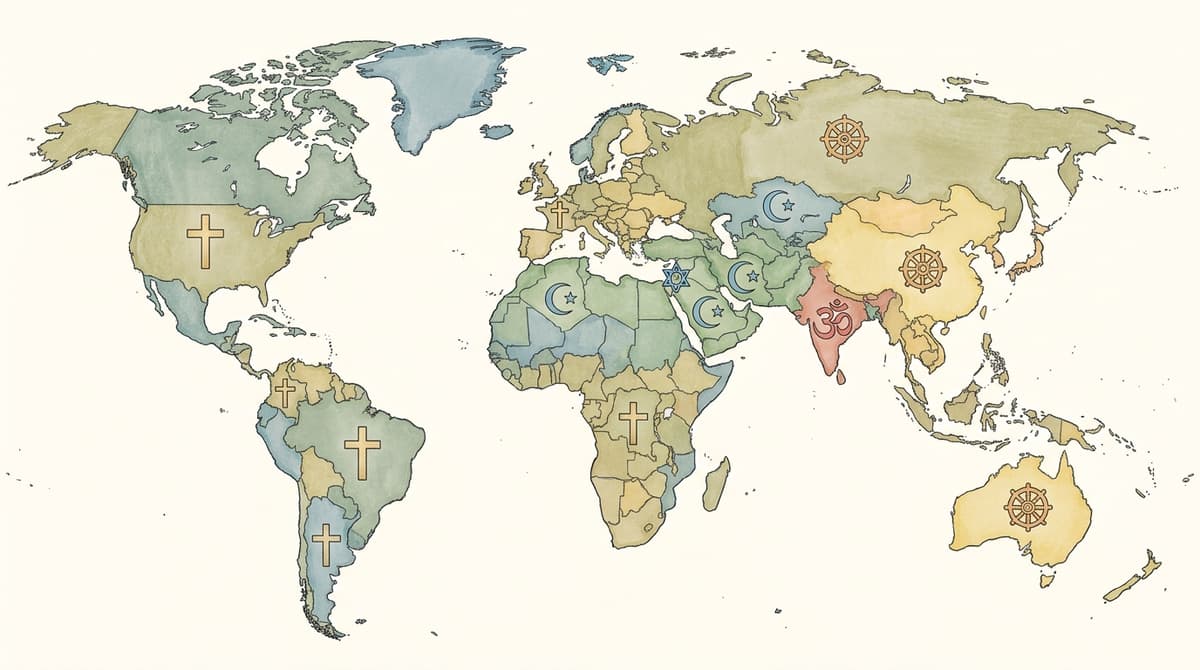
The Most Popular Religions in 2026
A look at the world's largest religions by number of followers in 2026, their core beliefs, geographic distribution, and how these numbers are changing.