Pufferfish in the Wild
- nature
- marine life
- vocabulary
- animals
What is a pufferfish?
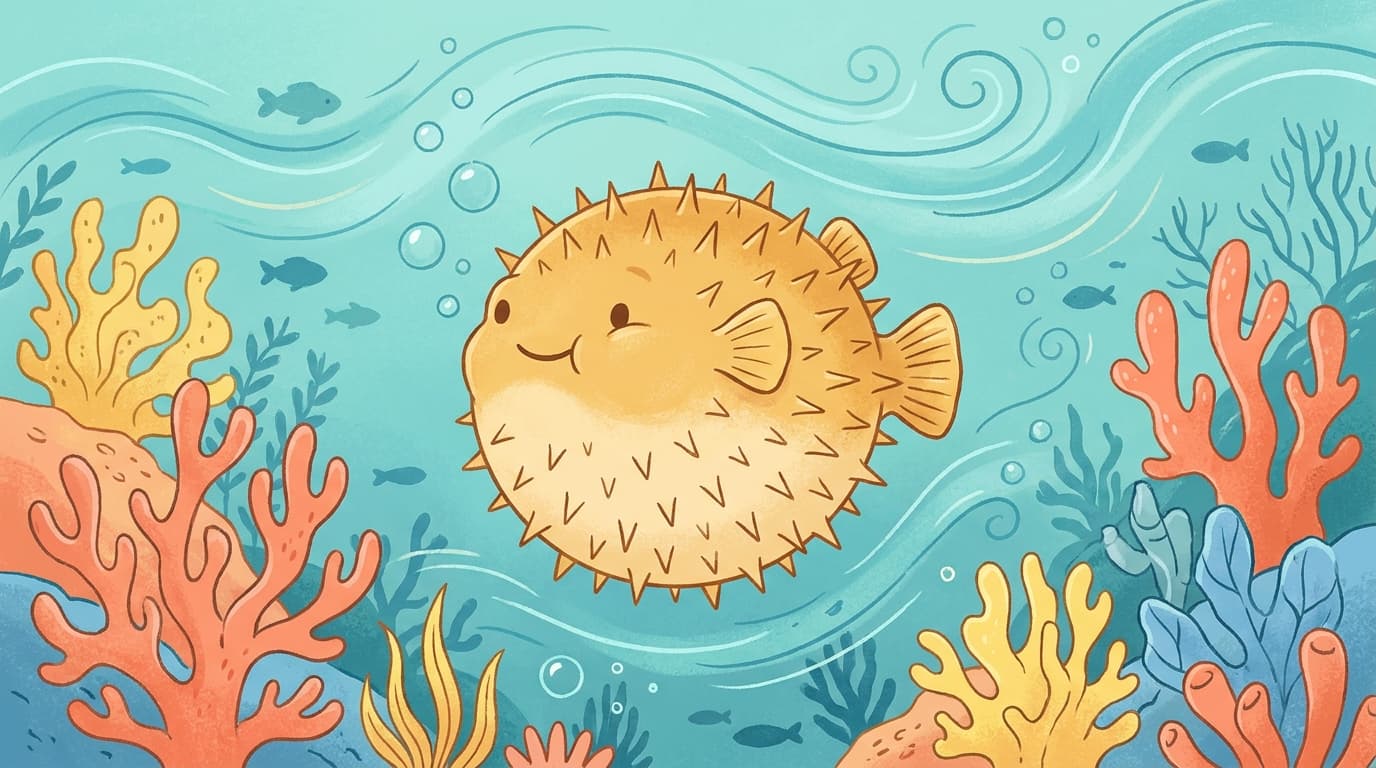
A pufferfish (also called a blowfish or globefish) is a type of fish known for its ability to inflate its body when threatened. The word "inflate" means to fill with air or water so that something becomes larger and rounder, like a balloon. There are approximately 120 species of pufferfish in the family Tetraodontidae , and they live in oceans around the world.
The name "pufferfish" comes from the verb "puff," which means to blow air or to swell up. When something puffs, it gets bigger quickly. You might see this word in other contexts too:
She puffed out her cheeks when she was angry.
The steam engine puffed smoke into the sky.
Pufferfish are unusual creatures. They are slow swimmers, but they make up for this with an extraordinary defense mechanism that makes them difficult and dangerous to eat.
The famous inflation defense
When a pufferfish feels threatened, it quickly swallows large amounts of water (or air if it's out of water) . This causes the fish to inflate to several times its normal size, turning into a round, spiky ball . The transformation happens in seconds.
A "defense mechanism" is a way that an animal protects itself from danger. Other defense mechanisms in nature include:
- A turtle pulling into its shell
- A skunk spraying a bad smell
- A chameleon changing colors to hide
The inflated pufferfish is hard for predators (animals that hunt other animals) to swallow. Many pufferfish also have spines on their skin that stick out when they inflate, making them even more difficult to eat . The spines are small, sharp points that cover the body.
Once the danger passes, the pufferfish releases the water and returns to its normal size and shape . However, inflation is stressful for the fish, and scientists believe pufferfish should not be provoked (deliberately annoyed or threatened) to inflate, as it may harm them.
Where pufferfish live
Most pufferfish species live in warm, tropical and subtropical ocean waters . "Tropical" means near the equator (the imaginary line around the middle of Earth), where the water stays warm year-round. "Subtropical" refers to regions just north and south of the tropics, still quite warm but with slightly more seasonal variation.
Pufferfish inhabit coral reefs, seagrass beds, and rocky areas , usually in shallow to moderate depths. A few species live in brackish water (a mix of salt and fresh water) or even completely fresh water in rivers .
"Inhabit" is a formal verb meaning "to live in." You can also use the simpler verb "live in," but "inhabit" appears often in scientific and nature writing:
✓ Polar bears inhabit the Arctic.
✓ Polar bears live in the Arctic.
Both sentences mean the same thing.
What pufferfish eat
Pufferfish are carnivores (meat-eaters), though their "meat" is usually small sea creatures with hard shells. Their diet includes mollusks (such as clams and snails), crustaceans (such as crabs and shrimp), and algae . Some species also eat coral or sea urchins.
Pufferfish have strong, beak-like teeth that are fused together — "fused" means joined or melted together so they form one piece. This hard beak is perfect for crushing shells. Their teeth never stop growing, so they need to eat hard-shelled prey to wear down their teeth naturally . If their teeth grow too long, they cannot eat properly.
The deadly poison
Here is one of the most important facts about pufferfish: almost all pufferfish contain tetrodotoxin, a substance that is extremely poisonous to humans and most animals . "Poisonous" and "toxic" mean the same thing — capable of causing illness or death if eaten, touched, or inhaled.
Tetrodotoxin is concentrated in the pufferfish's liver, ovaries, and sometimes skin . This toxin is roughly 1,200 times more poisonous than cyanide, and there is no known antidote . An "antidote" is a medicine that stops the effect of a poison.
Interestingly, pufferfish do not produce tetrodotoxin themselves; they accumulate it by eating bacteria that contain the toxin . "Accumulate" means to collect or gather slowly over time. The poison builds up in the fish's body throughout its life.
The toxin blocks nerve signals, causing paralysis, and can lead to death from respiratory failure . "Paralysis" means the loss of the ability to move. "Respiratory failure" means the lungs stop working, so the person cannot breathe.
Despite the danger, pufferfish (called "fugu" in Japanese) is considered a delicacy in Japan and must be prepared by specially licensed chefs who are trained to remove the toxic parts . A "delicacy" is a rare or expensive food that people consider special. Even with expert preparation, a few people die each year from fugu poisoning.
Protection from predators
Pufferfish rely on two main forms of protection:
- Inflation: Making themselves too large and spiky to swallow
- Poison: Deterring predators with their toxic flesh
"Deter" means to discourage or prevent someone (or something) from doing an action. If something deters you, it makes you decide not to do it.
Most predators quickly learn to avoid pufferfish after one unpleasant experience . The combination of bad taste and potential toxicity makes them an unattractive meal. However, a few predators, including some sharks and sea snakes, have developed resistance to the toxin and can eat pufferfish safely. "Resistance" means the ability to not be affected by something harmful.
Behavior and reproduction
Pufferfish are generally solitary, meaning they live alone rather than in groups or schools. They are most active during the day (diurnal), searching for food among rocks and coral.
Some species of pufferfish create elaborate patterns in the sand to attract mates . "Elaborate" means detailed and complicated. "Mates" are partners for reproduction. Male pufferfish swim in circles for days, creating beautiful geometric designs on the ocean floor. Females visit these "art galleries" and choose a male based on his pattern.
After mating, females lay eggs, and in some species, males guard the eggs until they hatch . The baby pufferfish are tiny and transparent (see-through) at first.
Conservation status
"Conservation status" refers to whether a species is at risk of disappearing from Earth (becoming extinct). Many pufferfish species face threats from habitat destruction, pollution, and overfishing . "Overfishing" means catching too many fish, faster than they can reproduce and replace their population.
Some pufferfish are also caught for the aquarium trade — people buy them to keep in home fish tanks. However, pufferfish need specific conditions and are difficult to care for properly in captivity (when animals are kept by humans, not living wild).
Several species are now listed as vulnerable or endangered, which means scientists are worried they might disappear if we do not protect them.
Why we should care
Pufferfish play an important role in their ecosystems (communities of living things and their environment). By eating animals with hard shells, they help control populations of mollusks and sea urchins. This keeps the ecosystem balanced.
They also remind us that nature is full of creative solutions to survival. The pufferfish cannot swim fast, and it is not particularly large or strong. But through inflation and chemical defense, it has survived for millions of years in oceans full of predators.
Understanding creatures like pufferfish helps us appreciate the complexity of ocean life. It also reminds us that beauty and danger can exist in the same small, round body floating through a coral reef.
Vocabulary summary
Here are key words from this post that are useful to remember:
- inflate = to fill with air or water and expand in size
- defense mechanism = a way an animal protects itself from danger
- predator = an animal that hunts other animals for food
- toxic / poisonous = able to cause illness or death
- lethal = deadly; able to cause death
- inhabit = to live in (a place)
- deter = to discourage or prevent an action
- accumulate = to collect or gather over time
- elaborate = detailed and complicated
- conservation = protection of nature and wildlife
Share
Test yourself
What does 'inflate' mean in the context of pufferfish?
Sources
Related articles
The Blue Whale: Earth's Largest Animal
Learn about the blue whale, the largest animal ever to live on Earth, from its massive size and krill diet to its powerful calls and endangered status.

Data Analytics for Dummies: A Complete Beginner's Guide
Learn what data analytics is, why it matters, and how businesses use it to make better decisions. A complete guide for beginners with clear explanations and real examples.

The History of Competitive Dog Racing
Competitive dog racing developed in two main forms: sled dog racing in cold northern regions and greyhound racing on enclosed tracks. Both sports evolved from practical uses of dogs into organized competitions with complex histories.