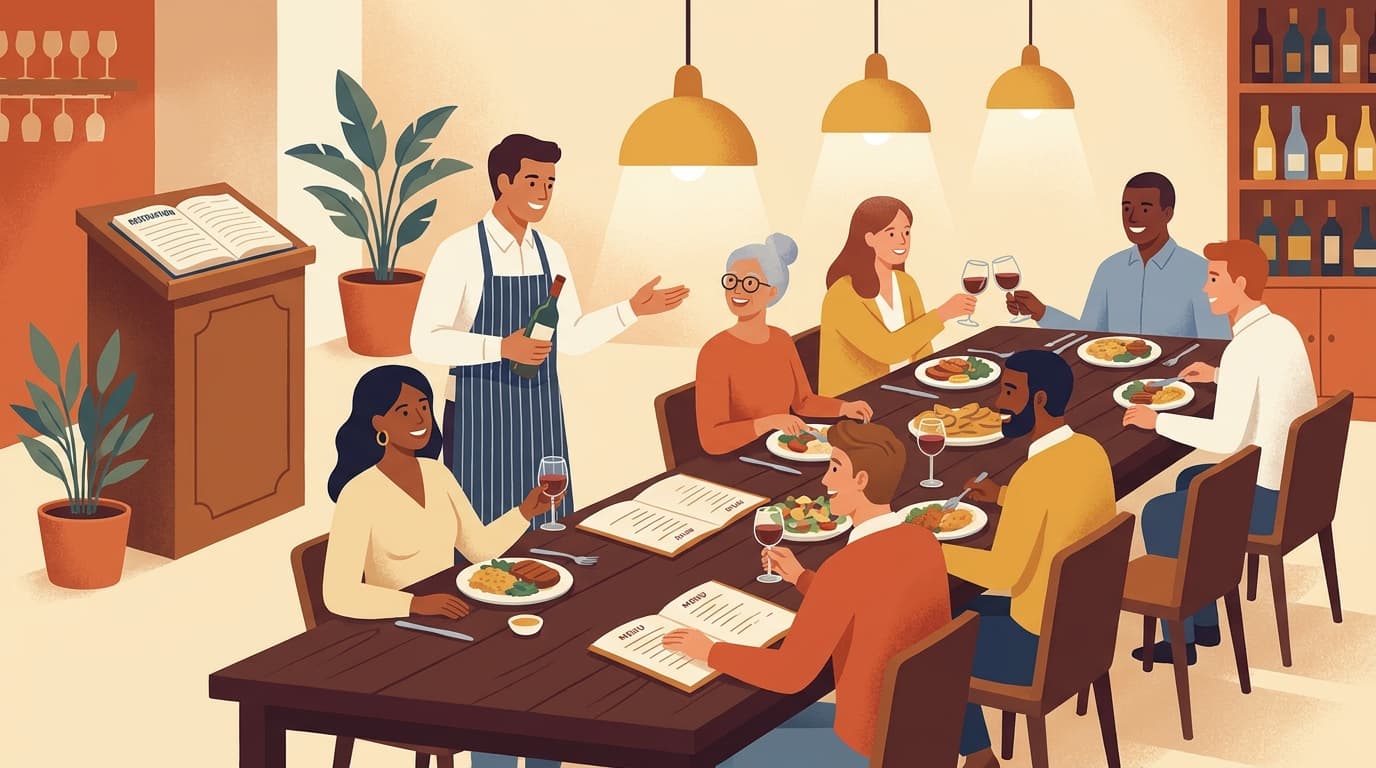
Restaurant Vocabulary: From Reservation to Tip
- vocabulary
- food
- dining
- speaking
Before you arrive
Making a
A reservation is an arrangement to have something kept for you — in this case, a table at a restaurant. In British English, people also say booking. In American English, reservation is the standard term.
When you call or use a website to reserve a table, you typically give:
- The date and time
- The number of people (party size)
- Your name
"I'd like to make a reservation for four people on Friday at 7 p.m."
The restaurant employee who answers is often called the or hostess (depending on gender, though "host" is increasingly used for everyone).
Arriving at the restaurant
When you walk in, the host greets you at the host stand (the small desk near the entrance). You tell them:
"We have a reservation under the name Park."
or
"Table for two, please." (if you don't have a reservation)
If no tables are available, they might tell you the wait time:
"It'll be about twenty minutes. We can put your name on the waitlist."
At the table
Seating and place settings
Once seated, you'll see a place setting in front of each chair. This includes:
-
Cutlery (British) or (American): knives, forks, and spoons used for eating
- Fork (usually on the left)
- Knife (on the right, blade facing the plate)
- Spoon (next to the knife, or above the plate for dessert)
-
Napkin or serviette (British, more formal): a cloth or paper square for wiping your mouth and hands
-
Plate and sometimes a bowl
-
Glass or glasses (for water, wine, etc.)
In a formal restaurant, you might have multiple forks and knives for different courses. The basic rule: work from the outside in.
The menu
The menu is a list of the food and drinks available , usually printed or displayed. Many restaurants now have digital menus on tablets or QR codes.
A menu is typically divided into sections:
- (also called starters in British English): small dishes served before the main
- Examples: soup, salad, spring rolls, bruschetta (Italian toasted bread with toppings)
- Main courses (also entrées in American English, or mains in British English): the primary, largest dish
- Examples: steak, pasta, grilled fish, curry
- Sides or side dishes: smaller portions served alongside the main course
- Examples: french fries (American) / chips (British), steamed vegetables, rice, mashed potatoes
- Desserts: sweet dishes served at the end
- Examples: cake, ice cream, pie, pudding
- Beverages or drinks: what you drink
- Examples: water, soda (American) / fizzy drink (British), coffee, tea, wine, beer
You might also see:
- Specials or specials of the day: featured dishes available only today, often not printed on the regular menu
- Chef's recommendation: a dish the chef especially suggests
- Combo or set meal: a fixed combination of dishes, usually at a lower total price
Talking to your
A server is a person who serves food and drinks to customers . Other common terms: waiter (traditionally male), waitress (female), or the gender-neutral wait staff. In American English, "server" is now the most common.
Your server will come to the table and ask:
"Can I get you something to drink?"
"Are you ready to order?"
"What can I get for you?"
Ordering food
When ordering, you can say:
"I'll have the grilled chicken."
"I'd like the pasta, please."
"Can I get the burger with fries?"
If you're not sure, you can ask:
"What do you recommend?"
"What's in the Caesar salad?"
"Is the soup spicy?"
"Does this dish contain nuts?" (important if you have allergies)
Customizing your order
Restaurants often let you modify dishes:
- "": served separately in a small dish, not mixed in
- "Can I have the dressing on the side?"
- "No [ingredient]": leave something out
- "No onions, please."
- "Extra [ingredient]": more of something
- "Extra cheese, please."
- "Substitute [X] for [Y]": replace one ingredient with another
- "Can I substitute salad for fries?"
Doneness (for meat)
If you order steak or a burger, the server will ask, "How would you like that cooked?" Common answers:
- Rare: cooked very little, red inside
- Medium-rare: slightly more cooked, pink and red inside
- Medium: pink inside
- Medium-well: slightly pink inside
- Well-done: fully cooked, no pink
During the meal
Courses
A course is one part of a meal served at one time . A simple meal might have one or two courses; a formal dinner might have five or more.
Common course order:
- First course / starter / appetizer
- Second course / main course / entrée
- Dessert
In a multi-course meal, servers usually clear plates between courses — that is, they take away the used dishes before bringing the next course.
Common requests during the meal
"Could we have some more water, please?"
"Excuse me, I didn't order this." (if the server brings the wrong dish)
"This is cold. Could you heat it up?"
"Could we have another napkin?"
and extras
Condiments are sauces or seasonings added to food:
- Salt and pepper
- Ketchup (American) / tomato sauce (British, informal)
- Mustard
- Mayonnaise / mayo
- Hot sauce
- Soy sauce
- Vinegar
These are often already on the table or available on request.
Finishing the meal
Paying the bill
When you're ready to leave, you need to pay. The piece of paper showing what you owe is called:
The bill (British English)
The check (American English)
To request it, say:
"Could we have the check, please?" (American)
"Could we have the bill, please?" (British)
"Check, please!" (casual American)
Sometimes the bill comes in a small folder or tray. You can:
- Pay with cash
- Pay with a credit card or debit card
- / split the check: divide the total among several people
- "Can we split the check?"
- "Separate checks, please." (each person pays only for what they ordered)
In the United States and Canada, tipping (leaving extra money for the server) is expected. The standard tip is 15–20% of the bill before tax. In many other countries, tipping is optional or included in the bill as a service charge.
If you pay by card, you can add the tip when you sign the receipt. If you pay cash, you can leave the tip on the table.
"." (means the server can keep any extra money you gave)
Leaving
Before you leave, you might say to your server:
"Thank you, everything was delicious."
"Thanks, we really enjoyed it."
The host might say:
"Have a great evening!"
"We hope to see you again soon."
Other useful restaurant vocabulary
- Booth: a seating area with a table between two long benches, often more private than regular tables
- High chair: a tall chair for babies and toddlers
- Booster seat: a seat that raises a small child higher at the table
- Buffet: a meal where dishes are laid out on a long table and you serve yourself
- All-you-can-eat: a fixed price for unlimited food
- Takeout (American) / takeaway (British): food prepared at a restaurant but eaten elsewhere
- Doggy bag or to-go box: a container to take home leftover food
- "Could I have a box for this?"
- Chef: the professional cook, especially the head cook
- Busser or busboy: the person who clears dirty dishes from tables (less common term in British English)
- Sommelier: a wine expert who helps you choose wine (in formal restaurants)
Common mistakes
✗ "I want the pizza." (too direct)
✓ "I'd like the pizza, please." or "I'll have the pizza."
✗ "Bring me water." (sounds like a command)
✓ "Could I have some water, please?"
✗ "I take the salad." (literal translation from some languages)
✓ "I'll have the salad." or "I'll take the salad." (less common but acceptable in American English)
✗ "The счёт, please." (mixing languages)
✓ "The check, please." (American) or "The bill, please." (British)
✗ "I want to pay separate."
✓ "Can we get separate checks?" or "Can we split the bill?"
Practice scenario
Here's a short conversation putting this vocabulary together:
Host: Good evening! Do you have a reservation?
You: Yes, for two people under the name Kim.
Host: Perfect. Right this way, please. Here's your table. Your server will be right with you.
(A minute later)
Server: Hi, I'm Maria, I'll be taking care of you tonight. Can I start you off with something to drink?
You: I'll have water, please.
Friend: Same for me.
Server: Great. I'll give you a few minutes to look at the menu.
(A few minutes later)
Server: Are you ready to order?
You: Yes, I'd like the grilled salmon with a side salad.
Server: Sure. And how would you like the salad dressing?
You: On the side, please.
Server: No problem. And for you?
Friend: I'll have the steak, medium-rare, with mashed potatoes.
Server: Excellent choices. I'll get those right out for you.
(After the meal)
You: Excuse me, could we have the check?
Server: Of course. I'll bring that right over.
(Server returns with the check)
You: Can we split this?
Server: Absolutely. I'll bring two checks.
You now have the vocabulary to navigate a restaurant with confidence. The next time you eat out in an English-speaking country, try using a few of these words and phrases — servers are usually patient and happy to help when they see you're making an effort.
Share
Test yourself
You want to eat at a popular restaurant tomorrow night. What should you do first?
Sources
Related articles
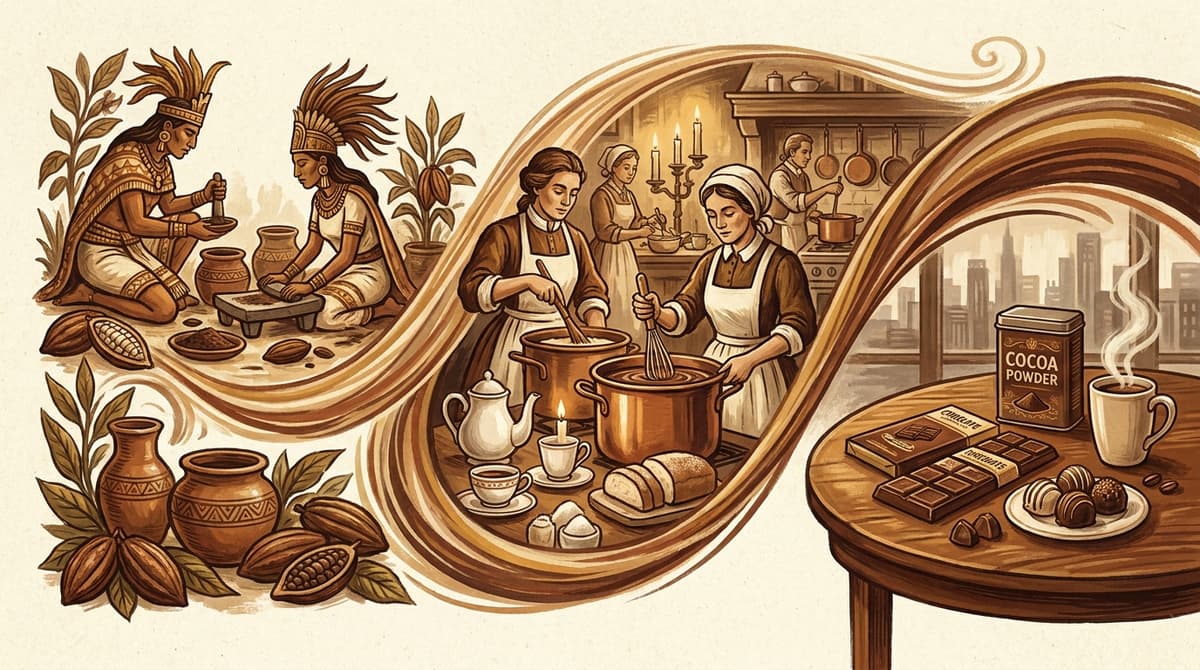
The History of Chocolate
Discover how chocolate traveled from ancient Mesoamerican ceremonies to the modern candy bar, transforming from a bitter sacred drink into the sweet treat loved worldwide today.
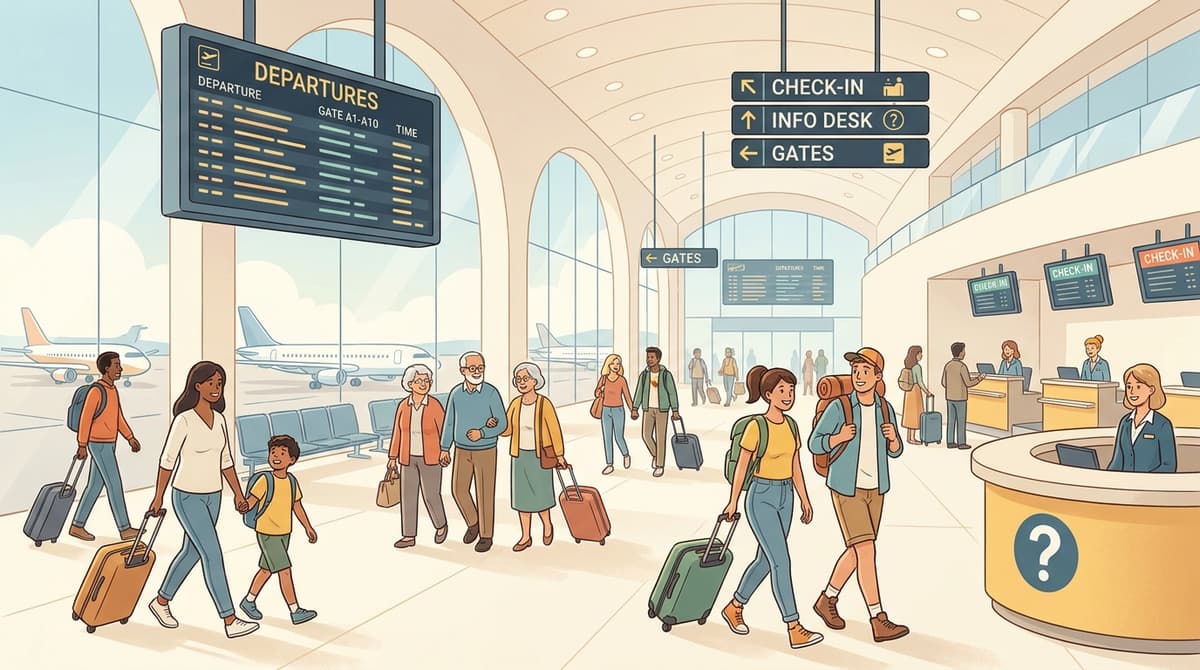
Airport Vocabulary: A Complete Guide for Travelers
Learn the essential words and phrases you need to navigate an airport confidently, from check-in to boarding and baggage claim.

Data Analytics for Dummies: A Complete Beginner's Guide
Learn what data analytics is, why it matters, and how businesses use it to make better decisions. A complete guide for beginners with clear explanations and real examples.