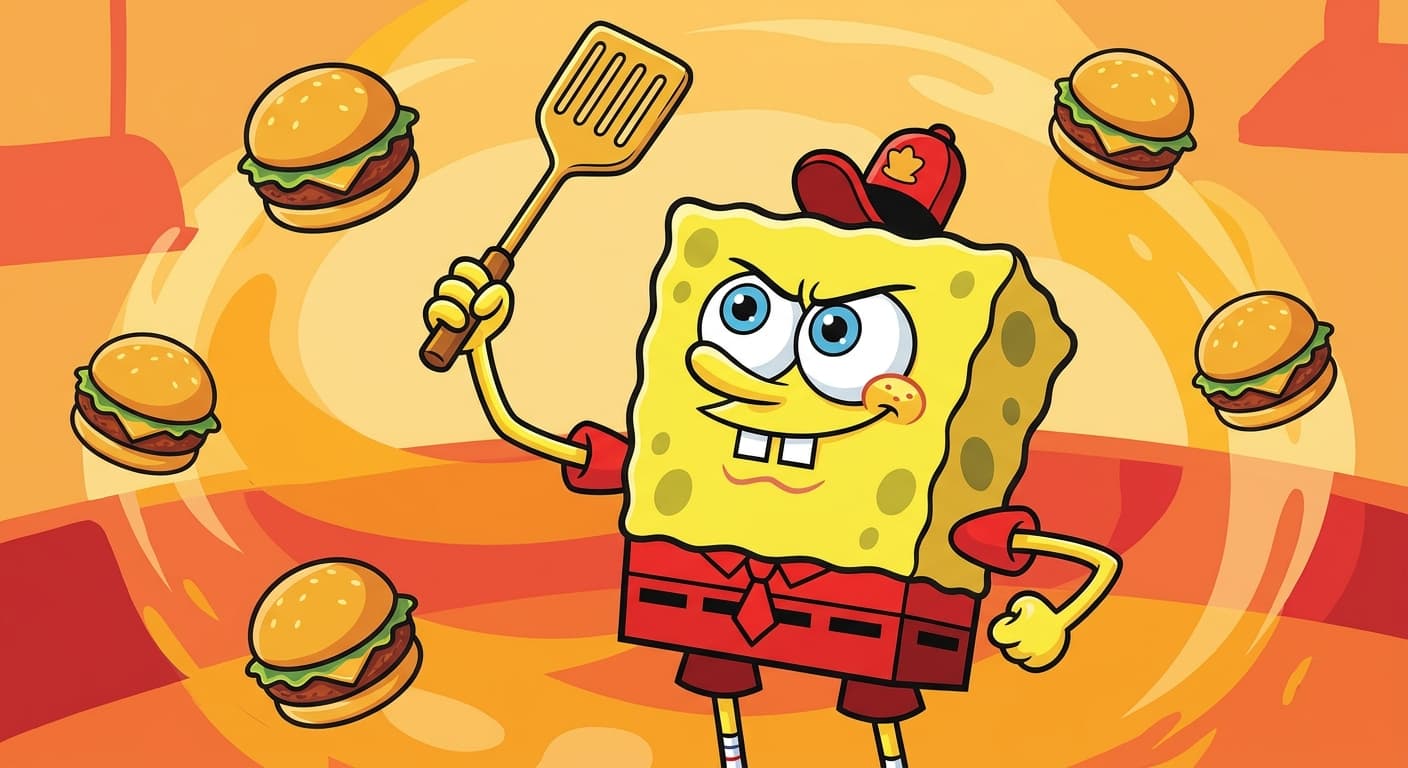
SpongeBob as a Model Employee: Lessons in Work Ethic and Dedication
- workplace
- work ethic
- career development
- soft skills
Introduction: The Unlikely Business Role Model
When you think of business excellence, SpongeBob SquarePants might not be the first name that comes to mind. Yet this cheerful sponge who flips burgers underwater at the Krusty Krab has more to teach about workplace success than many business consultants. A 'model employee' is typically associated with an individual who is considered to be highly efficient and productive, which makes them an asset to the employer. By this definition, SpongeBob is not just a good employee—he is an one. His nearly three decades at the Krusty Krab, his remarkable record of achievements, and his consistent behavior offer valuable lessons for anyone serious about building a strong career.
What Makes a Model Employee?
Before we examine SpongeBob's performance, let's establish what employers actually look for. The ten most important employee qualities are: communication (clear and respectful interaction), reliability (consistent performance), accountability (owning outcomes), teamwork (collaborative approach), adaptability (flexibility with change), critical thinking (logical problem-solving), initiative (proactive contribution), leadership (positive influence on others), professionalism (appropriate workplace conduct), and emotional intelligence (interpersonal awareness and empathy). Additionally, punctuality is vital but it's also important to be positive and enthusiastic, accept constructive feedback and demonstrate reliability in the workplace.
These standards are not arbitrary. Research shows that organizations with strong employees thrive. A workforce of good, engaged employees yields higher productivity, profitability, and retention than a team lacking these qualities, with teams of highly engaged employees being 21–23% more productive and 20+% more profitable than teams with disengaged staff.
SpongeBob's Remarkable Work Ethic
Consider SpongeBob's most striking achievement: his Employee of the Month awards. SpongeBob has won 374 consecutive Employee of the Month awards, which is about 31 years. This is not a result of luck or easy circumstances. SpongeBob loves his job and excels at it, while Squidward his job and does his job poorly. The contrast between the two employees—who work side by side under the same management—makes clear that superior performance comes from inner motivation, not external conditions.
SpongeBob consistently demonstrates a strong work ethic and takes his job seriously, which is a crucial leadership trait. In one memorable episode, SpongeBob explained that he comes to the Krusty Krab at 3 a.m., when he counts the sesame seeds. This is not a requirement of his job—it is a manifestation of his personal dedication to excellence. Few employees would volunteer for such , unglamorous work in the middle of the night.
Dedication and Punctuality
SpongeBob is early for work, which shows dedication and commitment. Punctuality is one of the most basic yet overlooked markers of professionalism. Good employees follow through without needing micromanaging—they deliver what they say they will, ask questions when they're unsure, and keep teams moving forward, including showing up on time, prepared, and ready to contribute.
SpongeBob embodies this principle. His attendance is flawless. He does not view the alarm clock as an obstacle to sleep; he views it as the signal to begin his purpose. A strong work ethic sets model employees apart and contributes to their workplace success. Reliability and consistency characterize a model employee with a strong work ethic—they consistently , complete tasks on time, and follow through on commitments, reliably delivering quality work and demonstrating dedication and commitment to their job and the goals of the organization.
and Passion
SpongeBob SquarePants has integrity that every entrepreneur and employee should . Perhaps the most revealing moment of his character comes in an episode where SpongeBob shows his incredible work ethic, his ability to work with what he has and make the best of every situation. He does not complain about his low wages (a legitimate grievance, given his employer's notorious cheapness). He does not seek a better position elsewhere. Instead, he channels his energy into mastering his craft.
One of SpongeBob's defining characteristics is his impenetrable love for his job as a chef for the Krusty Krab. This is the kind of motivation that employers cannot manufacture through incentive schemes. Initiative—the willingness to act proactively and seize opportunities—is a hallmark of employees who . An employee with initiative doesn't wait around to be told exactly what to do; they are a self-starter who looks for ways to contribute and improve things on their own. SpongeBob exemplifies this perfectly.
Adaptability and
SpongeBob is an exceptionally hard worker, being able to perform a lot of different jobs and tasks well—sometimes with what can be described as superhuman abilities—giving him a diverse set of skills and talents. In real workplaces, change is constant. Adaptability and flexibility are two essential qualities that set a model employee apart. The ability to adapt means being able to adjust to new situations, challenges, and changes within the workplace. Flexibility refers to the capacity to handle multiple tasks, manage shifting priorities, and accommodate unexpected demands.
SpongeBob has worked not only as a fry cook—his primary role—but also as a janitor when needed and in various other positions throughout the show. He approaches each role with the same enthusiasm and commitment. Despite his weirdness and frequent wacky antics, SpongeBob is very good at his job and loves it so much that he'll gladly take any opportunity to do more work. In fact, quite a few episodes have shown that SpongeBob could easily become a far more successful fry cook if he struck out on his own and focused on his own original fry cook creations, but he loves his job at the Krusty Krab too much to seriously consider it. This loyalty and flexibility are rare traits.
The Importance of Reliability
What happens when SpongeBob is absent from the workplace? The answer is clear: the business . When SpongeBob is fired, Mr. Krabs and Squidward recognize that the restaurant has faltered ever since. Both ask SpongeBob to be the fry cook again, and with his confidence restored, SpongeBob gladly accepts his old job and brings back all the customers. This is not an exaggeration for comedic effect—it demonstrates a fundamental business truth: Model employees can be trusted to consistently meet deadlines, fulfill their responsibilities, and follow through on commitments.
There has to be a level of trust in any boss-employee relationship. Without this fundamental trust, a productive relationship cannot be formed or grow. Integrity is a vital characteristic for all employees, meaning being honest with one's supervisor and operating by moral principles. SpongeBob's trust value is so high that his absence makes the entire restaurant unmanageable. This is the position every employee should aspire to—to be so reliable and skilled that the organization recognizes the gap when you are gone.
The Contrast: What Not to Do
The show provides a useful comparison through SpongeBob's coworker, Squidward. Squidward hates his job, the Krusty Krab, Krabby Patties, and his peers at work. His attitude has consequences: Despite his dissatisfaction, he makes little effort to find a different job, and has attempted to quit on only a few occasions, most notably in "Can You Spare a Dime?" It's implied that part of the reason for his hatred to his job is having to work with SpongeBob.
While Squidward's feelings are understandable—especially given his employer's character flaws—his approach to the workplace fails. He stays in a job he hates, performs poorly, and derives no satisfaction from his work. SpongeBob, facing the same circumstances, chooses a different path. This is the crucial difference between a struggling employee and a model one: often, it is not circumstances that determine success, but mindset and effort.
Key Lessons for Your Career
If you want to become a model employee like SpongeBob, focus on these practices:
Show up on time and stay committed. Punctuality signals respect for your job and your team. SpongeBob's consistency in attendance is non-negotiable.
Find meaning in your work. SpongeBob's boundless enthusiasm and love for cooking drive his success forward. Whether flipping Krabby Patties or engaging in friendly competition, SpongeBob's character embodies the spirit of . You do not need to love every aspect of your job, but you should find something worth your effort.
Develop versatility. The more tasks you can competently handle, the more valuable you become. Volunteer for different projects. Expand your skills. Show that you can adapt to change.
Maintain integrity even under difficult circumstances. Low pay, a difficult boss, or limited advancement opportunities do not excuse poor performance or dishonesty. SpongeBob never steals from the register, never betrays Mr. Krabs' recipes, and never cuts corners on quality. Integrity in the workplace has wide-reaching benefits for culture and performance—it builds trust, fosters positive relationships, and enhances team cohesion and productivity. When employees operate with integrity, colleagues feel they can rely on each other and on leadership, which reduces the friction of internal politics or fear. Decisions are made in the open, credit is given fairly, and ethical behavior is modeled at all levels.
Take initiative. Do not wait to be asked. Identify problems and solve them. A valuable skill is to look ahead and anticipate issues instead of just reacting in the moment. This long-range vision allows workers to solve problems before they happen, plan for , and work with appropriate lead times. SpongeBob sees what needs doing and does it.
Conclusion: Why SpongeBob Matters
SpongeBob SquarePants is successful not because he is special or unusually talented (though he is both). He is successful because he embodies the habits and attitudes that employers value: reliability, dedication, integrity, enthusiasm, and adaptability. All exemplary employees have core characteristics that make them top contributors who also derive significant job satisfaction. They are far from clones who all act and think the same way, but they share foundational traits for success.
Your workplace may not involve making Krabby Patties. But the principles that make SpongeBob a model fry cook apply universally: show up, do your best, treat your work with respect, remain flexible, and find pride in what you do. Over time, these small choices compound into the kind of career success that SpongeBob has achieved—success not measured only in awards, but in being genuinely valuable to your organization and satisfied with your contribution.
In the end, SpongeBob's 374 Employee of the Month awards are not really about the awards. They are about a character who discovered his purpose and pursued it with consistency, integrity, and joy. That is a lesson everyone can learn.
Share
Test yourself
According to the post, how many consecutive Employee of the Month awards has SpongeBob won?
Sources
Related articles

Understanding Spirituality in 2026: A Guide to Modern Beliefs and Practices
Spirituality in 2026 is shifting toward personal, flexible practices that blend technology with timeless traditions. Young people are choosing individual spiritual paths over formal religion while seeking meaning and connection.

How to Manage Risk for the Everyday Man
Learn practical strategies to identify, understand, and manage the financial and life risks that affect your family and future, from emergency savings to insurance and smart budgeting.

The Best Natural Sources of Carbohydrates for Your Health
Discover which natural carbohydrate sources provide the most nutrients and health benefits, from whole grains and legumes to starchy vegetables and fruits.