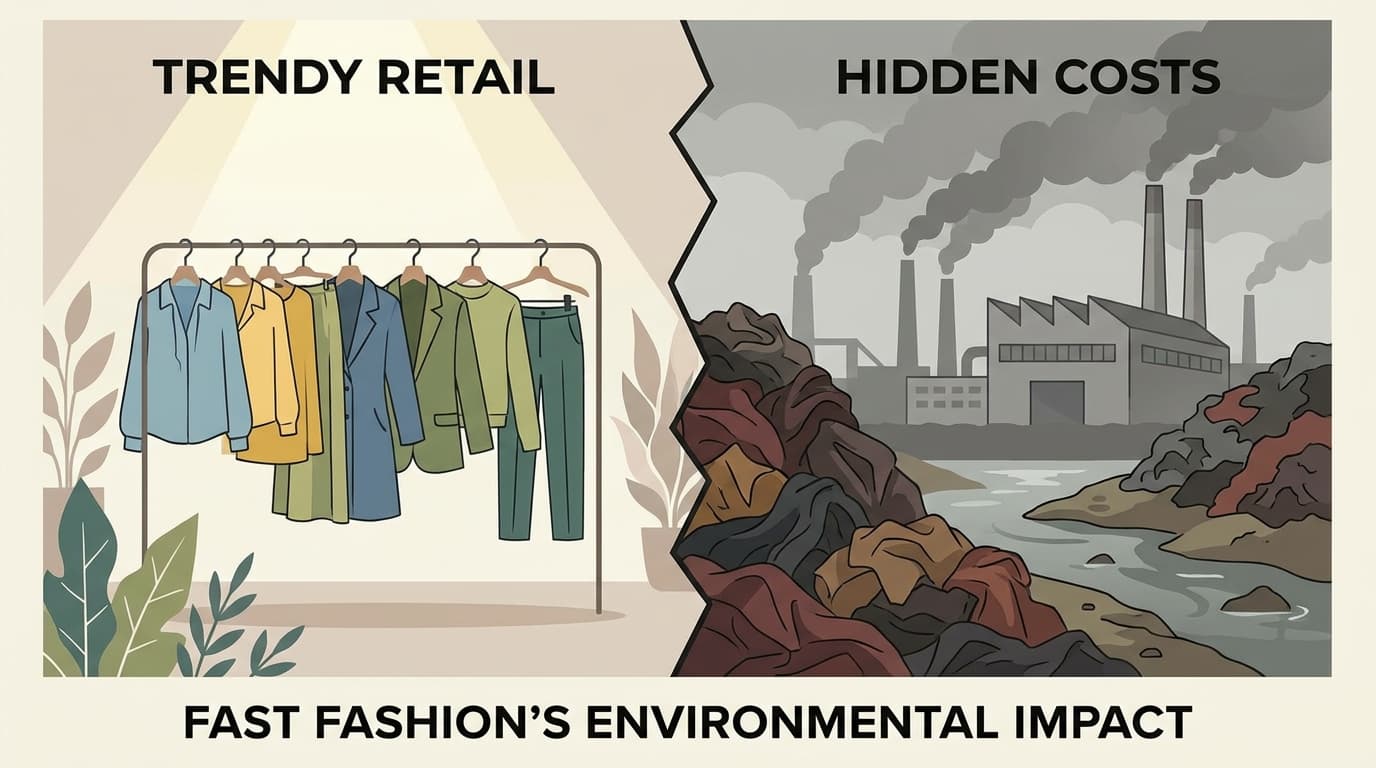
The Problem with Fast Fashion
- environment
- social issues
- vocabulary
- current events
What is fast fashion?
Fast fashion is a business model in the clothing industry. Companies design, produce, and sell new styles very quickly—sometimes in just a few weeks. The goal is to follow (that is, to copy or keep up with) the latest fashion trends and get cheap clothing into stores before the trends change.
Fast fashion brands produce large quantities of inexpensive garments and release new collections constantly, encouraging consumers to buy more frequently. You might see a dress on a fashion runway or worn by a celebrity, and within weeks a similar version appears in stores for a low price.
Some well-known fast fashion brands include Zara, H&M, Shein, and Forever 21. These companies have made trendy clothing affordable for millions of people. But this success comes at a cost—a very high cost to both the environment and the people who make the clothes.
Environmental problems
Water use and pollution
The fashion industry is the second-largest consumer of water globally, and textile dyeing is responsible for about 20% of global industrial water pollution. Making just one cotton t-shirt can require up to 2,700 liters of water—that's enough drinking water for one person for 2.5 years.
After factories use water to dye (that is, to color) and treat fabrics, they often release toxic chemicals into rivers and streams. These chemicals harm fish, plants, and communities that depend on clean water.
Greenhouse gas emissions
The fashion industry produces approximately 10% of global carbon emissions, more than international flights and maritime shipping combined. A carbon footprint is the total amount of greenhouse gases (like carbon dioxide) produced by human activities. Fast fashion has an enormous carbon footprint because of:
- Manufacturing processes that use fossil fuels
- Transportation of materials and finished products around the world
- Energy needed to run factories and stores
Textile waste
Most fast fashion is designed to be worn only a few times before it falls apart or goes out of style. Globally, consumers purchase 60% more clothing items than they did 15 years ago but keep each garment for half as long.
Where do these clothes go? Many end up in landfills—large areas of land where trash is buried. A landfill is essentially a huge pit where we dump things we don't want anymore. The equivalent of one garbage truck full of textiles is landfilled or burned every second.
When synthetic (that is, human-made) fabrics like polyester break down in landfills, they can take hundreds of years to decompose (to break down naturally). During this time, they release harmful chemicals into the soil and air.
Microplastics
Many fast fashion items are made from synthetic materials like polyester, nylon, and acrylic. These are types of plastic. When you wash these clothes, tiny pieces of plastic called microplastics break off and flow into waterways.
Microplastics are pieces of plastic smaller than five millimeters—about the size of a sesame seed or smaller. Washing synthetic clothes releases an estimated 500,000 tons of microfibers into the ocean every year, equivalent to 50 billion plastic bottles. Fish and other sea animals eat these microplastics, and they eventually make their way into the human food chain.
Social and ethical problems
Worker exploitation
To exploit someone means to treat them unfairly in order to benefit from their work. Fast fashion relies heavily on the exploitation of workers, especially women in developing countries.
Garment workers often face unsafe working conditions, extremely low wages, excessive working hours, and forced labor. Many workers earn less than a living wage—the minimum income necessary to meet basic needs like food, housing, and healthcare.
To produce clothes so cheaply and quickly, brands put pressure on factories to cut costs. Factories respond by:
- Paying workers as little as possible
- Requiring long shifts, sometimes 14-16 hours per day
- Ignoring safety standards
- Not allowing workers to form unions (organizations that protect workers' rights)
Dangerous conditions
The Rana Plaza factory collapse in Bangladesh in 2013 brought global attention to the dangers garment workers face. The building collapsed, killing over 1,100 people and injuring more than 2,500. The factory produced clothing for major international fast fashion brands.
This tragedy was not an isolated incident (that is, not the only example). Factory fires, building collapses, and chemical exposure continue to harm and kill garment workers around the world.
Why does fast fashion exist?
Fast fashion exists because of a cycle of supply and demand. On the supply side, companies want to maximize profits. They can make more money by producing clothes cheaply and selling large quantities.
On the demand side, consumers have changed their relationship with clothing. Social media and celebrity culture create pressure to always wear something new and on-trend. Low prices make it easy to buy impulsively—to buy without thinking carefully.
Marketing also plays a role. Marketing means the activities companies use to promote and sell products. Fast fashion brands use constant advertising and create a sense of urgency: "Buy now before it's gone!" This encourages people to shop more frequently and throw away clothes that are still wearable.
What can we do?
Buy less and choose better
The most effective action is to buy fewer clothes and keep them longer. Before purchasing something, ask yourself:
- Do I really need this?
- Will I wear it at least 30 times?
- Is it good quality?
- Can I afford it without financial stress?
When you do buy new clothes, choose quality over quantity. A well-made item might cost more initially, but it will last for years instead of months.
Support ethical brands
Look for brands that prioritize ethical and sustainable practices. Ethical means morally right and fair—ethical fashion treats workers fairly and pays them proper wages. Sustainable means able to continue without harming the environment.
Some certifications to look for include:
- Fair Trade Certified
- GOTS (Global Organic Textile Standard)
- B Corporation certification
- Oeko-Tex Standard 100
These labels indicate that a company meets certain environmental and social standards.
Buy secondhand
Secondhand means previously owned by someone else. Buying used clothing from thrift stores, vintage shops, or online platforms like Depop and Vinted gives clothes a second life and reduces demand for new production.
Thrift means to be careful with money and resources, and a thrift store is a shop that sells donated used items at low prices. Shopping secondhand is increasingly popular and can be a way to find unique pieces while reducing your environmental impact.
Care for your clothes
Make your clothes last longer by:
- Washing them less frequently (unless they're actually dirty)
- Using cold water and gentle cycles
- Air-drying instead of using a dryer
- Repairing small damages like loose buttons or small tears
- Storing clothes properly
Spread awareness
Talk to friends and family about fast fashion's problems. Share information on social media. Support organizations working to reform the fashion industry. The more people understand the issue, the more pressure companies will feel to change their practices.
Vocabulary summary
Here are key terms from this post:
- fast fashion – cheap clothing produced quickly to follow trends
- carbon footprint – the total greenhouse gases produced by an activity
- landfill – a place where trash is buried
- microplastics – tiny pieces of plastic smaller than five millimeters
- to exploit – to treat someone unfairly for profit
- ethical – morally right and fair
- sustainable – able to continue without causing harm
- secondhand – previously owned by someone else
- thrift store – a shop selling donated used items
The grammar of environmental problems
When discussing problems, you'll often use these patterns:
✓ The fashion industry uses enormous amounts of water.
✗ The fashion industry uses water enormous.
The adjective (enormous) comes before the noun (amounts).
✓ Clothes end up in landfills.
✗ Clothes end up at landfills.
We use in landfills because items go inside them.
✓ The fashion industry is responsible for 10% of carbon emissions.
✗ The fashion industry is responsible of 10% of carbon emissions.
The phrase is "responsible for," not "responsible of."
✓ Fast fashion harms both workers and the environment.
✗ Fast fashion harm both workers and the environment.
"Fashion" is singular, so the verb needs an -s: harms.
Final thoughts
Fast fashion offers cheap, trendy clothes, but the real cost is much higher than the price tag. The industry damages our planet through water pollution, carbon emissions, and textile waste. It exploits workers through low wages and dangerous conditions.
As consumers, we have power. Every purchase is a choice. By buying less, choosing quality, supporting ethical brands, and caring for what we already own, we can push the fashion industry toward a more sustainable and fair future.
The problem is enormous, but change is possible when enough people decide their choices matter.
Share
Test yourself
What does 'fast fashion' mean?
Sources
- What is fast fashion? - The Business of Fashion
- Environmental impacts of fast fashion - Earth.Org
- The environmental costs of fast fashion - Nature Reviews Earth & Environment
- Fast fashion's environmental impact - UN Environment Programme
- Labor conditions in fashion industry - International Labour Organization
- The true cost of fast fashion - BBC Future
- Microplastics from textiles - IUCN
- Water use in fashion industry - World Resources Institute
Related articles
What is Earth Day?
Earth Day is an annual event on April 22 when people around the world take action to protect our planet. Learn about its history, why we celebrate it, and how you can participate.

Data Analytics for Dummies: A Complete Beginner's Guide
Learn what data analytics is, why it matters, and how businesses use it to make better decisions. A complete guide for beginners with clear explanations and real examples.
Mastering Personal Finance: Essential Money Words and Skills for ESL Learners
Learn the essential vocabulary and concepts you need to talk about money, budgeting, saving, and investing in English—from checking accounts to emergency funds.