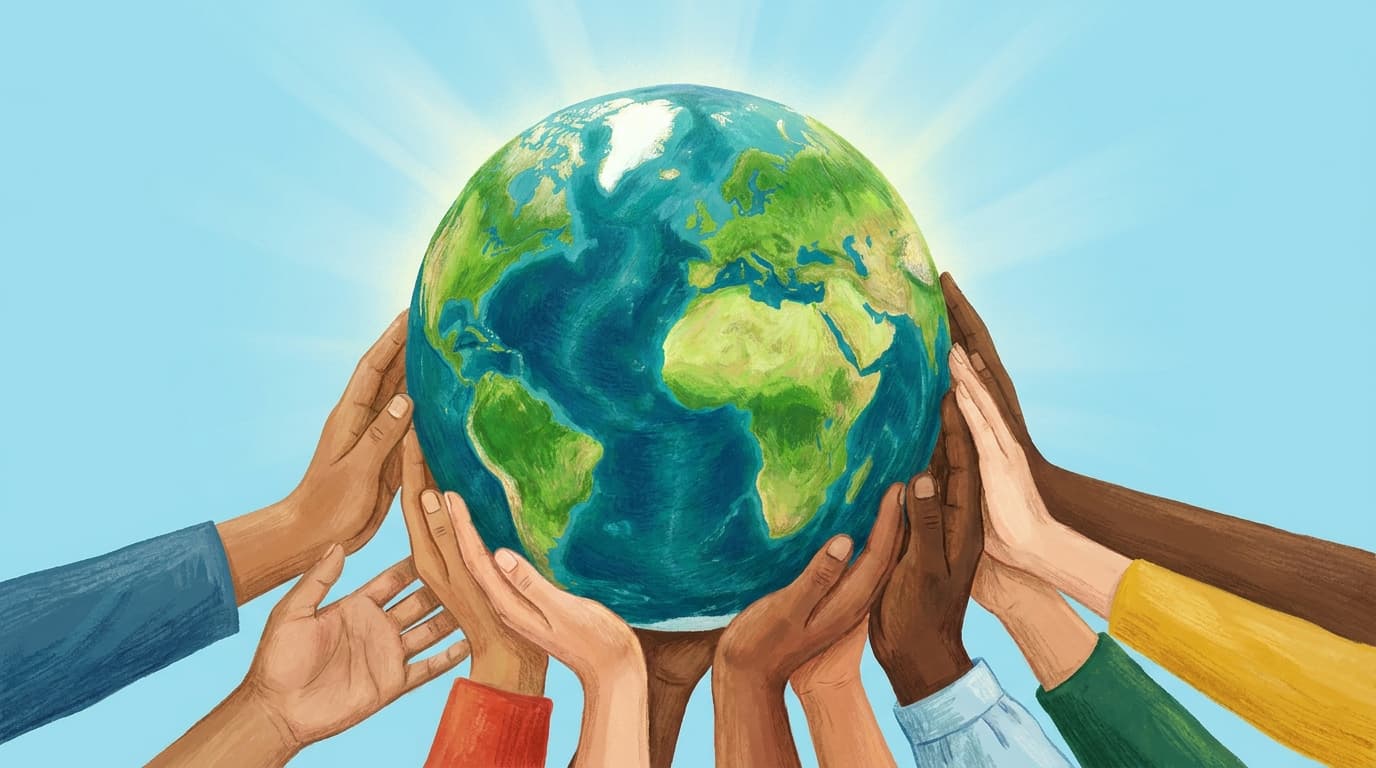
What is Earth Day?
- environment
- culture
- holidays
- vocabulary
What Earth Day means
Earth Day is an event on April 22 to support for environmental protection. Every year, more than a billion people around the world participate in activities that help our planet. They plant trees, clean up beaches and parks, learn about climate change, and in their communities.
The word "environment" refers to the natural world around us: the air we breathe, the water we drink, the land we live on, and all the plants and animals that share the planet with us. "Environmental protection" means taking care of these things so they stay healthy for future generations.
Earth Day is an annual celebration that honors the achievements of the environmental movement and raises of the need to protect Earth's natural resources for future generations. It reminds us that we all share one planet, and we must work together to keep it clean and safe.
How Earth Day started
The story of Earth Day begins in the United States in the 1960s. At that time, was a serious problem. Americans were consuming vast amounts of leaded petrol, and deadly smog and polluting smoke were accepted daily occurrences. Factories dumped waste into rivers, and there were no laws to stop them.
Earth Day was by Wisconsin Senator Gaylord Nelson, who wanted a new way to educate people about protecting the Earth. In 1969, he read about the student anti-war protests (called "teach-ins") happening on college campuses across the country. He thought, "Why not do the same thing for the environment?"
Senator Gaylord Nelson proposed the idea to hold a nationwide environmental teach-in on April 22, 1970, and hired a young activist, Denis Hayes, to be the national coordinator. A teach-in is a special event where people gather to learn about and discuss important issues, usually outside of regular classrooms.
Why April 22? The day was chosen because it did not with Spring Break, final exams, major religious holidays such as Easter, and was late enough in spring to anticipate decent weather for outdoor activities. The organizers wanted as many students as possible to participate.
The result was extraordinary. Twenty million people participated in activities for the first Earth Day in the United States. That was 10 percent of the entire U.S. population at that time! People gathered in cities, on college campuses, at schools, and in communities. They marched, held demonstrations (peaceful protests), and attended educational events.
What happened after the first Earth Day
The first Earth Day changed everything. In July of 1970, the Environmental Protection Agency was established by special executive order to regulate and enforce national pollution legislation. The Environmental Protection Agency (EPA) is a government organization that sets rules to protect air, water, and land.
Earth Day also led to the passage of the Clean Water and Endangered Species Acts. These laws protect rivers and lakes from pollution and help save animals that are in danger of disappearing forever.
For the first 20 years, Earth Day was mainly celebrated in the United States. But in 1990, everything changed. In 1990, Denis Hayes, the original national coordinator in 1970, took it international and organized events in 141 nations.
More than 200 million people in 141 countries participated in Earth Day celebrations.
Today, Earth Day includes a wide range of events coordinated globally through earthday.org including 1 billion people in more than 193 countries. It has become the world's largest civic observance—that means the biggest day when ordinary citizens (not just government officials) take action together.
Why we celebrate Earth Day
We celebrate Earth Day for several important reasons:
To . Many people don't realize how serious environmental problems are. Earth Day helps educate people about issues like pollution, climate change (the warming of our planet), deforestation (cutting down too many forests), and species extinction (when animals or plants disappear forever).
To take action. Earth Day isn't just about learning—it's about doing. People organize cleanups, plant trees, start recycling programs, and pressure governments to pass environmental laws.
To show unity. Celebrating Earth Day serves as a conscious reminder of how our planet is and how important it is to protect it. When more than a billion people participate together, it sends a powerful message that protecting the environment matters to everyone.
To inspire hope. Environmental problems can feel , but Earth Day shows that individual actions . When millions of people each do something small, together they create big changes.
What people do on Earth Day
Earth Day activities vary around the world, but they all focus on helping the planet. Here are some common ways people celebrate:
Community cleanups. Common ways to celebrate Earth Day include beach or park cleanups, volunteer tree planting events, demonstrations, and spending time in nature. Volunteers pick up trash (litter) in parks, along rivers, at beaches, and in neighborhoods.
Planting trees. Trees are essential for a healthy planet. They clean the air, provide homes for animals, and help cool our cities. Many Earth Day events include planting trees or creating community gardens.
Educational events. Schools, museums, and community centers hold teach-ins, lectures, and workshops where people learn about environmental issues and solutions.
Demonstrations and marches. People gather peacefully to show their support for environmental protection and to encourage governments and businesses to take action.
Energy conservation. Some people use Earth Day to make changes at home: they start composting (turning food waste into soil), begin recycling, switch to reusable bags instead of plastic, or reduce their energy use.
Digital participation. In recent years, especially during the COVID-19 pandemic, many Earth Day events moved online, with virtual teach-ins, livestreams, and social media campaigns.
The 2026 Earth Day theme
Each year, Earth Day has a theme—a main focus or message. Our Power, Our Planet is Earth Day 2026's theme reflecting a fundamental truth: environmental progress doesn't depend on any single administration or election.
It's sustained by daily actions of communities, educators, workers, and families protecting where they live and work.
This theme emphasizes that everyone has power to make a difference. You don't need to wait for governments or big companies to act. Small actions—recycling, using less water, choosing sustainable products, supporting environmental causes—all matter. When millions of people take small actions every day, they add up to significant change.
Important Earth Day milestones
Over the decades, Earth Day has witnessed many important moments:
1970: The first Earth Day and the creation of the U.S. Environmental Protection Agency.
1990: Earth Day goes global, with participation in 141 countries.
1995: Gaylord Nelson receives the Presidential Medal of Freedom, the highest award given to a civilian, in honor of his environmental work.
2016: On Earth Day 2016, the landmark Paris Agreement was signed by the United States, the United Kingdom, China, and 120 other countries. The Paris Agreement is an international treaty (a formal agreement between countries) to fight climate change.
2020: On Earth Day 2020, over 100 million people around the world observed the 50th anniversary of the event, now the world's largest civic observance. Many events moved online due to the COVID-19 pandemic.
2026: The 56th Earth Day, celebrated under the theme "Our Power, Our Planet."
How Earth Day changed the world
The impact of Earth Day extends far beyond a single day each year. Here are some of the lasting changes it helped create:
Environmental laws. Earth Day was the precursor of the largest grassroots environmental movement in U.S. history and the impetus for national legislation such as the Clean Air and Clean Water acts. These laws have made air and water much cleaner in many countries.
Global awareness. Before Earth Day, many people didn't think about the environment as something that needed protection. Earth Day made environmental issues part of everyday conversation.
Institutional change. The creation of the EPA and similar agencies in other countries means there are now government departments specifically focused on protecting the environment.
Cultural shift. Recycling, using reusable bags, conserving water—these behaviors that are common today were rare before Earth Day raised awareness about waste and pollution.
Useful vocabulary for talking about Earth Day
When you discuss Earth Day in English, these words and phrases will help:
Environment: The natural world around us (air, water, land, plants, animals).
Pollution: Harmful substances in the environment, like chemicals in water or smoke in the air.
Climate change: The long-term warming of our planet caused by human activities, especially burning fossil fuels (coal, oil, gas).
Sustainability: Using resources in a way that doesn't harm the environment for future generations.
Conservation: Protecting natural resources and wildlife.
Fossil fuels: Energy sources like coal, oil, and natural gas that come from ancient plants and animals and cause pollution when burned.
Renewable energy: Energy from sources that don't run out, like solar power (from the sun) or wind power.
Carbon footprint: The amount of carbon dioxide (a greenhouse gas) your activities produce.
Ecosystem: A community of living things and their environment working together.
Biodiversity: The variety of different plants and animals in a place.
How you can participate
You don't need to wait for an organized event to participate in Earth Day. Here are simple actions anyone can take:
Reduce waste. Use reusable water bottles and shopping bags instead of disposable plastic ones. Think before you throw things away—can they be recycled or repurposed?
Save energy. Turn off lights when you leave a room. Unplug devices you're not using. Walk, bike, or use public transportation instead of driving when possible.
Plant something. Even a small plant or herb garden on your windowsill helps the environment.
Learn and share. Read about environmental issues and share what you learn with friends and family.
Support environmental causes. Donate to environmental organizations, sign petitions, or volunteer for local conservation projects.
Make conscious choices. When shopping, choose products with less packaging, buy local food, and support companies that care about the environment.
Join or organize an event. Look for Earth Day events in your community, or organize your own cleanup or tree-planting activity with friends.
Grammar note: environmental collocations
When talking about Earth Day and the environment, certain words naturally go together. These combinations are called "collocations." Here are some useful ones:
- raise awareness (not lift awareness): The campaign aims to raise awareness about ocean pollution.
- take action: We must take action to protect endangered species.
- environmental protection (not environment protection): Earth Day promotes environmental protection.
- climate change (not climate changing): Scientists agree that climate change is a serious threat.
- renewable energy (not reusable energy): Solar power is a form of renewable energy.
Using the right collocations makes your English sound more natural and fluent.
A day for the future
Earth Day reminds us that we don't inherit the Earth from our ancestors—we borrow it from our children. Every action we take today affects the world that future generations will live in.
Senator Gaylord Nelson, the founder of Earth Day, understood this. He once said that protecting the environment would require sustained commitment. Nearly six decades later, his message remains urgent. Climate change, pollution, and habitat loss continue to threaten our planet.
But Earth Day also reminds us that change is possible. The first Earth Day led to cleaner air and water laws. It created agencies to protect the environment. It changed how millions of people think about their relationship with nature.
That single day drew 20 million Americans into the streets and sparked the modern environmental movement. Today, with more than a billion participants worldwide, Earth Day continues to inspire hope and action.
The question isn't whether one person can make a difference—it's whether each of us will choose to try. Earth Day happens on April 22, but its spirit lives in the daily choices we all make. Every time you recycle, conserve water, or speak up for the environment, you participate in the movement that started more than 50 years ago and continues to grow stronger every year.
Earth Day is more than a holiday—it's a reminder that we all share responsibility for the planet we call home. Whether you join a beach cleanup, plant a tree, or simply learn something new about the environment, you become part of a global community working to protect our Earth for generations to come.
Share
Test yourself
When is Earth Day celebrated each year?
Sources
Related articles
The History of Chocolate
Discover how chocolate traveled from ancient Mesoamerican ceremonies to the modern candy bar, transforming from a bitter sacred drink into the sweet treat loved worldwide today.
The Problem with Fast Fashion
Fast fashion creates cheap, trendy clothing—but at a high cost to the planet and workers. Learn the vocabulary and facts behind this global problem.

Who Are The Greys?
The Greys are the most recognizable alien beings in popular culture—small, grey-skinned creatures with large black eyes. Learn where this image comes from and why it became so famous.