The Present Perfect: Connecting Past and Present
- present-perfect
- verb-tenses
- grammar
- past-tense
What the present perfect is
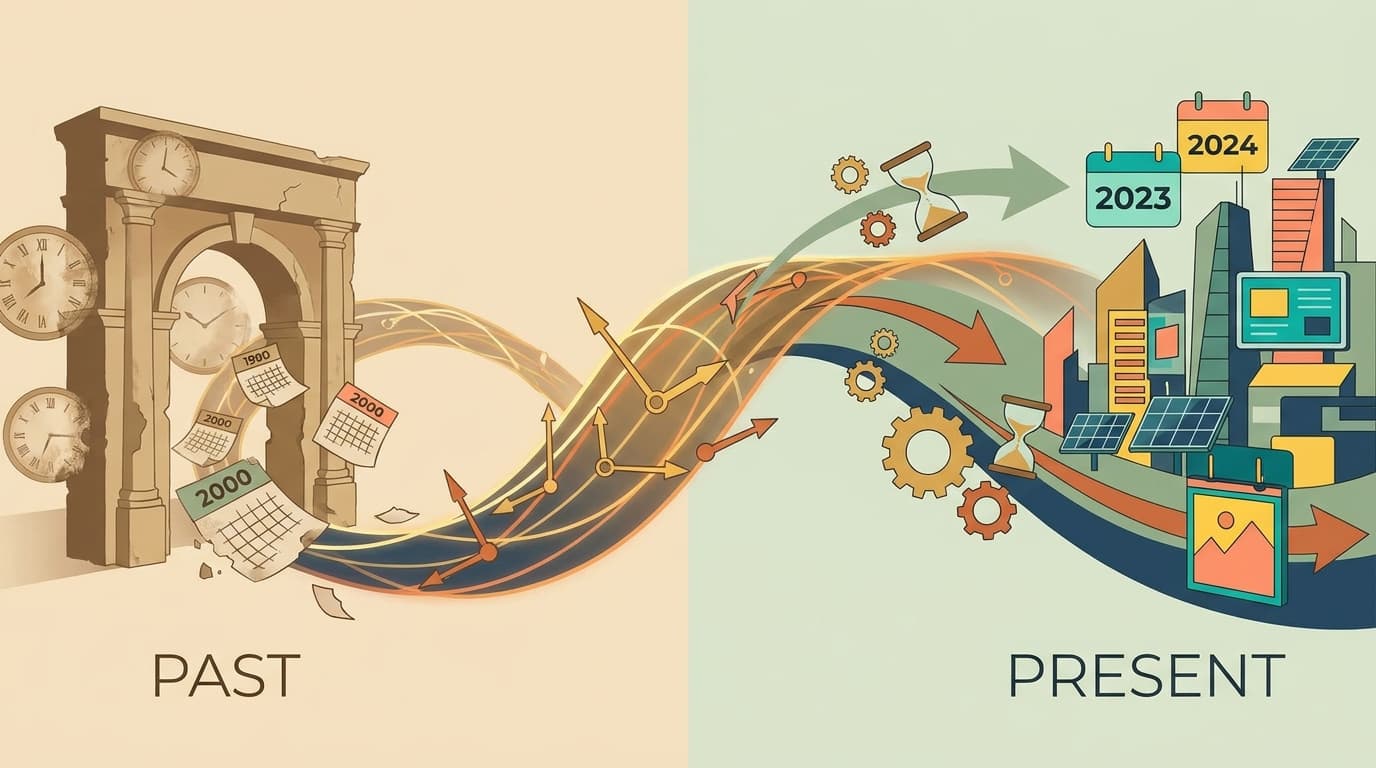
The present perfect is formed with have/has + the past participle (the -ed form) of the verb, and it refers to events in the past that connect to the present. This is the key idea: the present perfect builds a bridge between something that happened before now and the moment you are speaking.
The formula is simple:
Share
Sources
- Present perfect simple (I have worked) - Cambridge Grammar
- Past simple or present perfect? - Cambridge Grammar
- Present perfect: typical errors - Cambridge Grammar
- Present perfect | LearnEnglish - British Council
- Using The Present Perfect Tense in English - Perfect English Grammar
- Present perfect + ever, never, already, yet | EF
- The Present Perfect in British and American English | Cambridge English
- Present perfect with 'for' and 'since' | EF
- Present perfect simple: been and gone | Oxford Learner's Dictionaries
- Present perfect: 'just', 'yet', 'still' and 'already' | LearnEnglish - British Council
Related articles
Present Perfect vs. Simple Past: How to Choose the Right Tense
Learn when to use the present perfect and when to use the simple past, and understand why the choice matters for clear communication in English.

Possessive Pronouns: Mine, Yours, and the Rest
Possessive pronouns replace nouns to show ownership without repeating the noun itself. Learn the difference between mine and my, when to use whose, and how to avoid common mistakes.

Tag Questions: How to Use Them Correctly
Tag questions are short questions added to the end of statements to check information or ask for agreement. Learn how to form them correctly and use the right intonation.