Science and the Paranormal: Understanding the Evidence and the Debate
- paranormal
- science
- parapsychology
- critical thinking
What Is the Paranormal?
The term "paranormal" typically refers to , such as psychokinesis, hauntings, and clairvoyance, which the basic limiting principles of current scientific understanding. In simpler words: paranormal means "beyond normal" or "outside science." When something contradicts what we know works and what we expect from nature, people often call it paranormal.
By definition, the paranormal (or supernatural) does not to conventional expectations of nature. This creates an interesting problem. If a paranormal claim were tested and proven true using rigorous science, it would no longer be paranormal—it would become part of science itself.
In actuality, many such events can be to the of human perception and, in some cases, to legitimate scientific phenomena that had not been discovered or were not widely known about at the time of the "paranormal" occurrence. This means that some things people once considered paranormal—things that seemed impossible—have been explained through science as our knowledge grew.
Parapsychology: The Scientific Study of the Paranormal
Parapsychology is a field of study that focuses on such psychic phenomena as precognition, clairvoyance, telepathy, out-of-body experiences, and other paranormal abilities to determine either their validity or at least explain why people feel as though they have these abilities or experiences.
The term parapsychology was coined in 1889 by philosopher Max Dessoir as the German parapsychologie. However, J. B. Rhine's book, New Frontiers of the Mind (1937), brought the laboratory's findings to the general public. In his book, Rhine popularized the word "parapsychology", coined by psychologist Max Dessoir over 40 years earlier, to describe the research conducted at Duke. Rhine's work in the 1930s transformed paranormal study into an experimental laboratory science rather than a purely observational field.
Key Paranormal Phenomena Studied
Extrasensory Perception (ESP)
Extrasensory perception (ESP), also known as a sixth sense, or cryptaesthesia, is a claimed paranormal ability pertaining to reception of information not gained through the recognized physical senses, but sensed with the mind. ESP includes three main types:
-
Telepathy: Transfer of information of thoughts or feelings between individuals by means other than the five classical senses.
-
Clairvoyance: Obtaining information about places or events at remote locations by means unknown to current science.
-
Precognition: Perception of information about future places or events before they occur.
Psychokinesis and Other Abilities
Psychokinesis: The ability of the mind to influence matter, time, space, or energy by means unknown to current science. Other paranormal claims include near-death experiences: An experience reported by a person who nearly died or who experienced clinical death and then revived. Reincarnation: The rebirth of a soul or other non-physical aspect of human consciousness in a new physical body after death.
Historical Approaches to Paranormal Research
In the years after 1900, several 'psychical' laboratories were purpose-built in Britain, Europe and the US by serious practitioners aiming to establish rigorous, controlled conditions for scientifically investigating the supernatural. One famous example involved investigating mediums (people who claimed to communicate with spirits). Boston-based medium Mina Crandon, alias 'Margery', was a famous subject of scientific scrutiny in the 1920s. Margery was known for producing 'ectoplasm' phenomena—strange bodily emanations she claimed were spiritual in origin—in séances. In the 1920s, Margery was investigated by several psychologists, physicians, engineers, and others using a range of scientific instruments and approaches.
A simple set of black and white cards was developed, originally called Zener cards – now called ESP cards. They bear the symbols circle, square, wavy lines, cross, and star. There are five of each type of card in a pack of 25. In a telepathy experiment, the "sender" looks at a series of cards while the "receiver" guesses the symbols. This card-guessing method allowed researchers to use statistics to test whether results exceeded chance.
The Current Scientific Consensus
The scientific community remains deeply . The scientific consensus is that there is insufficient evidence to support the existence of psi phenomena.
Parapsychology has been criticized for continuing investigation despite being unable to provide convincing evidence for the existence of any psychic phenomena after more than a century of research.
To date there have been no experimental results that have gained wide acceptance in the scientific community as valid evidence of the paranormal.
By the 2000s, the status of paranormal research in the United States had greatly declined from its height in the 1970s, with the majority of work being privately funded and only a small amount of research being carried out in university laboratories.
Methods for Investigating the Paranormal
Various approaches to the paranormal include anecdotal, experimental, and participant-observer approaches and the skeptical investigation approach.
The Ganzfeld Procedure
The Ganzfeld (German for "whole field") is a technique used to test individuals for telepathy. The technique—a form of moderate sensory deprivation—was developed to quickly quiet mental "noise" by providing mild, unpatterned stimuli to the visual and auditory senses.
The visual sense is usually isolated by creating a soft red glow which is diffused through half ping-pong balls placed over the recipient's eyes.
Skeptical and Scientific Approaches
Psychologists began to findings about psychics by using the scientific method to eliminate contamination—like seeing the reflection of a playing card in a pair of glasses during a guessing game, for example.
This devotion to science and data transparency is widely held by paranormal researchers and academic journals for paranormal psychology. Those who conduct research about paranormal phenomena typically take pains to provide error-free data because they often have additional skepticism to overcome about their findings.
Scientific skeptics advocate critical investigation of claims of paranormal phenomena: applying the scientific method to reach a rational, scientific explanation of the phenomena to account for the paranormal claims, taking into account that alleged paranormal abilities and occurrences are sometimes hoaxes or misinterpretations of natural phenomena.
Scientific Explanations for Paranormal Experiences
Rather than confirming paranormal abilities, research has uncovered natural explanations for many experiences people interpret as paranormal.
Sleep Paralysis
Alien abduction experiences can typically be explained by a combination of societal expectations and scripts for what an alien abduction should be like. They also correspond to the medical condition of sleep paralysis.
The body is naturally paralyzed during REM sleep, but the feeling of paralysis can cause terror if experienced while awake. Sometimes, the body and brain , and a person can experience a few seconds to a couple minutes of waking paralysis, which is often accompanied by hallucinations. The hallucinations can involve anything from spiders to ghosts and are usually characterized by a feeling of dread.
Infrasound
Infrasound, low-frequency sounds below the range of human hearing, has been linked to feelings of unease and ghostly sensations in some studies.
Researchers uncovered why the brain creates ghost experiences and have uncovered a number of real-world explanations for the eerie sensations people often label as "hauntings." One of the most surprising is infrasound — extremely low sound frequencies that fall below what we consciously hear. These vibrations can trigger physical reactions such as unease, shivers, pressure in the chest, or even visual distortions. In fact, one famously "haunted" workspace was eventually traced back to a malfunctioning ventilation fan producing infrasound that affected everyone inside, convincing them they'd glimpsed ghostly shapes.
Electromagnetic Fields and Environmental Factors
There are also electromagnetic fields (often referred to as EMF). Some paranormal investigators propose that ghosts and spirits emit or interact with electromagnetic fields. However, research in this area is inconclusive, and there is no definitive evidence supporting this claim.
Supernatural" perceptions can also arise from reactions to toxic substances – such as carbon monoxide, formaldehyde and pesticide.
Cognitive and Psychological Factors
People with higher dopamine levels have the ability to find patterns and meanings where there are none. This is why scientists have connected high dopamine levels with paranormal belief.
Oxford University Justin Barrett has theorized that "agency"—being able to figure out why people do what they do—is so important in everyday life that it is natural for our brains to work too hard at it, thereby detecting human or ghost-like behavior in everyday meaningless stimuli.
A 2015 research study conducted by French scholars at the University of Toulouse found that belief in the paranormal is strongly correlated with a certain type of cognitive thinking. Distinguishing between reflective thinkers and intuitive thinkers, the researchers noted that after experiencing a bizarre or unusual event, reflective thinkers are more likely to simply acknowledge that they cannot explain the event, while intuitive thinkers are much more likely to desire an explanation for the event and thus attribute it to the supernatural or paranormal realm.
Ghost Hunting and Paranormal Investigation
Ghost hunting is the process of investigating locations that are purportedly haunted by ghosts. The practice has been heavily criticized for its dismissal of the scientific method.
One aspect of so-called ghost hunting that marks it as pseudoscience is that they don't carry out any actual hypothesis testing.
However, some organized researchers attempt to apply rigorous methodology. Some teams have a "" mentality, and that's reflected in their cases.
Most of that work is debunking, though some teams have had unexplained findings.
Researchers note that they won't call something proof unless they have replicated the occurrence.
How Paranormal Beliefs Form
Fantasy proneness is the propensity to believe in things without objective proof. Childhood trauma is a major predictor of fantasy proneness because trauma survivors are more likely to use the adaptive coping mechanism of dissociation.
Surveys consistently indicate paranormal beliefs are prevalent within the general population. For example, a representative survey of British adults conducted by the market-research company BMG Research found that a third of their sample believed in paranormal phenomena, and a further 21% were 'unsure'.
Interestingly, ESP belief can exist side by side with rational and scientific worldviews within the same individual. This could be either because some individuals do not acknowledge a sharp dividing line between these worldviews or, quite contrary, that they do recognize this division and keep their intuitive approach for the domains other than science.
The Problem of
Falsifiability, according to science philosopher Karl Popper, is essential to scientific investigation; a hypothesis cannot be deemed scientific unless it can be tested and proven untrue.
There is also an issue of non-falsifiability associated with psi. The most common rationale offered by parapsychologists to explain the lack of a repeatable demonstration of ESP or other psi phenomena is to say that ESP in particular and psi phenomena are difficult to replicate.
This creates a logical challenge: if paranormal phenomena are claimed to be unpredictable or unable to be tested under controlled conditions, they may not fit the definition of something science can actually study.
What the Public Believes
Belief in the paranormal remains widespread. In 2017, the Chapman University Survey of American Fears asked about seven paranormal beliefs and found that "the most common belief is that ancient advanced civilizations such as Atlantis once existed (55%). Next was that places can be haunted by spirits (52%), aliens have visited Earth in our ancient past (35%), aliens have come to Earth in modern times (26%), some people can move objects with their minds (25%), fortune tellers and psychics can survey the future (19%), and Bigfoot is a real creature. Only one-fourth of respondents didn't hold at least one of these beliefs."
The Way Forward: Science and the Paranormal
Modern research increasingly views hauntings as a product of overlapping factors: biology, psychology, and social context. This biopsychosocial approach acknowledges that while some hauntings might have natural explanations, others remain that challenge scientific understanding.
By investigating these seemingly ridiculous claims, we can find very real scientific knowledge about our brains and how we perceive the world. Paranormal experiences – whether it's a psychic or an or seeing a ghost – may not tell you anything about the world of the supernatural, because that world doesn't exist, but those experiences still tell you about how your brain and mind operate.
The paranormal remains a fascinating intersection between human experience, psychology, and scientific inquiry. While mainstream science has not confirmed the existence of paranormal phenomena, the field continues to generate research that teaches us about perception, belief, and cognition—all very real aspects of how humans understand the world.
Share
Test yourself
What does the term 'paranormal' mean?
Sources
- Paranormal - Wikipedia
- Parapsychology - Wikipedia
- Using science to investigate the paranormal | National Science and Media Museum
- Ghost Busted: When Science Meets Paranormal Activity | Discover Magazine
- Paranormal beliefs and cognitive function: A systematic review and assessment of study quality across four decades of research - PMC
Related articles

Plasma: The Fourth State of Matter Explained
Discover what plasma is, how it forms, and why it dominates the universe. Learn the key differences between plasma and gases, and see everyday examples you may have missed.
Quantum Computing: What the Heck Is That?
Quantum computers harness the strange laws of quantum physics to process information in fundamentally new ways. Here's what you need to know about this emerging technology.
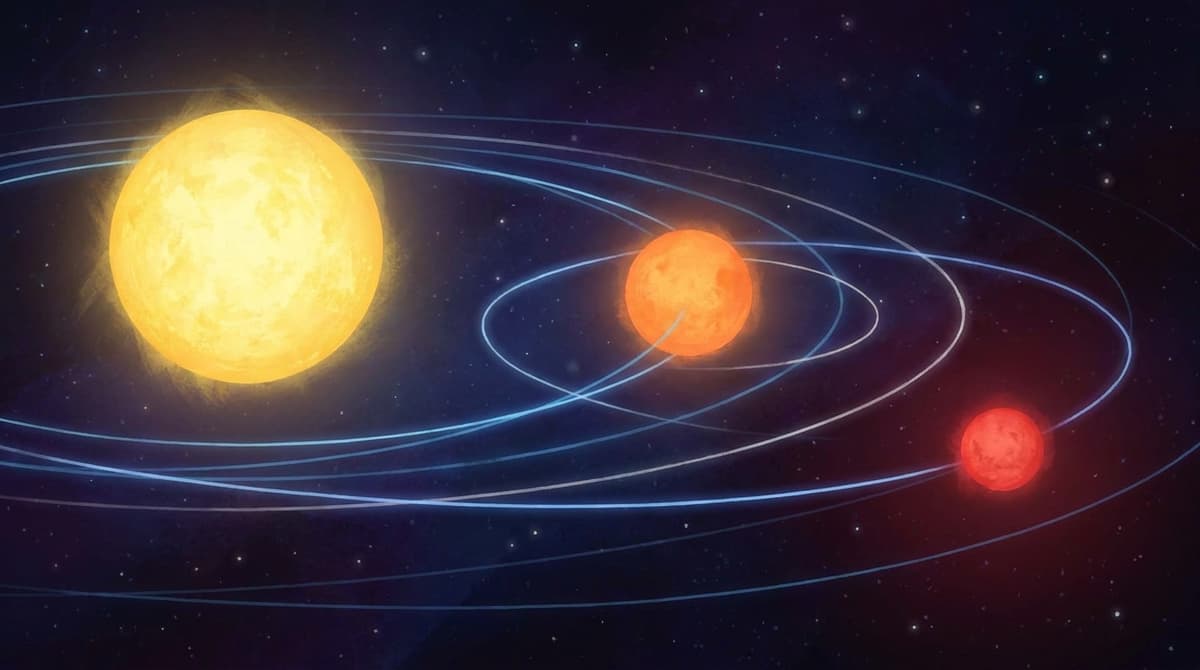
Alpha Centauri: Our Closest Neighbor in the Stars
Alpha Centauri is a triple star system just over 4 light-years away—the closest star system to Earth. Learn about its three stars, the planets orbiting them, and what makes this system so special.