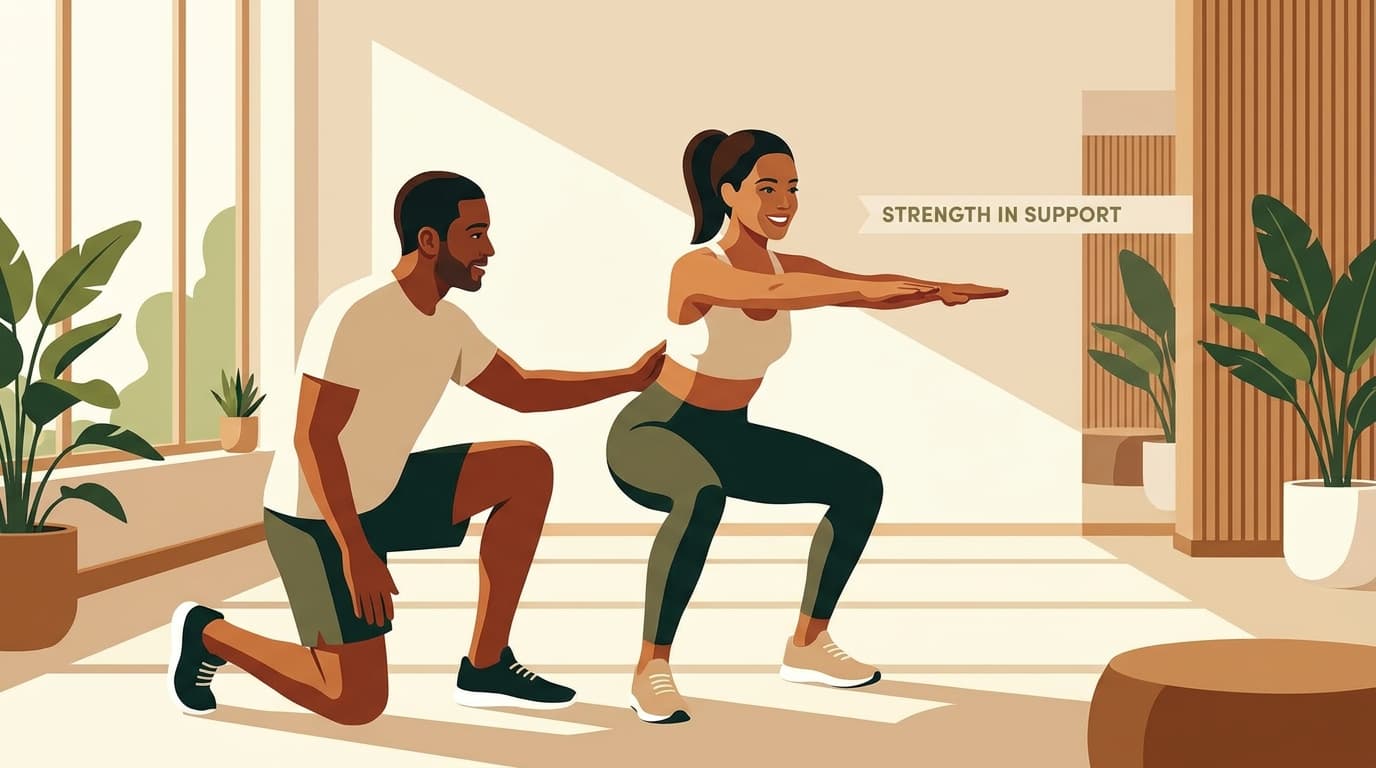
Become Your Best Friend's Personal Trainer
- fitness
- friendship
- personal training
- motivation
Why Train Your Best Friend?
Working out with a friend brings an added layer of motivation, and the mutual encouragement and shared commitment create a sense of that increases the likelihood of sticking to your plan and achieving fitness goals. When you become your friend's personal trainer, you are not just teaching them to exercise—you are offering them time, attention, and a reason to show up. That is powerful.
But being a friend's trainer is not the same as being their casual gym buddy. As a personal trainer, it's important to maintain when working with clients, because when you become friends, it can be difficult to remain objective and a trainer who is objective can accurately track a client's progress and hold them accountable for their fitness goals. This post will walk you through how to do both: be a real friend and a real trainer.
Understand the Trainer-Friend Balance
The most important thing to know is that while it's natural to develop friendly relationships with clients, it's important for personal trainers to maintain professional boundaries—being friendly and approachable can help build trust and , but it's important to remain objective and focused on the client's fitness goals.
This does not mean you cannot be close. But it does mean setting clear expectations at the start. Tell them it will be strictly professional—a specific time, and no kidding around because they're friends. When you step into the trainer role, you are working. You are not just hanging out. Your job is to keep your friend safe, honest about their effort, and moving toward their goals.
Why Boundaries Matter
When you lose objectivity, you may be more likely to overlook a client's or progress and fail to provide adequate feedback or adjustments, and you may make unbiased decisions about the exercises and weights appropriate for their fitness level, which can prevent injuries. In other words, if you are too focused on being nice, you might let your friend use bad form, skip important exercises, or progress too fast—all of which lead to injury.
Your friendship is actually the reason to be professional, not the reason to drop your standards.
Learn the Basics Before You Start
If you want to train your friend seriously, you should know what you are doing. You do not need to be certified to help a friend work out casually, but if you want to design programs, correct form, and take real responsibility for their safety and results, getting some formal knowledge is wise.
A certified personal trainer is a personal trainer who has acquired certification from an accredited fitness institution, such as the American College of Sports Medicine (ACSM) or the National Academy of Sports Medicine (NASM), and certified personal trainers help others achieve their health and fitness goals through safe, efficient workout programs.
Completing a certification program typically takes less than one year and costs anywhere from $299 to $1,619, depending on your program. Certification options exist for every commitment level. You can study at your own pace, take an accredited exam, or simply do a shorter course just to learn the fundamentals.
At minimum, learn:
- Basic exercise science (how muscles work, what causes injury)
- How to assess someone's fitness level
- How to correct common form mistakes
- How to write a simple workout plan
How to hold a current adult CPR and AED certificate with hands-on skills check
This knowledge protects your friend and builds your confidence.
Get Medical Clearance First
Before you write the first workout, have an honest conversation with your friend. Before starting any new exercise program, your first stop should be a conversation with your primary care doctor—this is especially critical if you have any pre-existing health conditions (like heart disease, diabetes, or arthritis), are over the age of 45, or have been for a long time, and your doctor can clear you for physical activity and identify any potential risks or limitations you need to be aware of.
This is not optional. It is a sign of real professionalism. If your friend has a history of knee problems, heart issues, or has not exercised in years, they need their doctor's approval. Once they have it, you can move forward safely.
Understand Your Friend's Goals and Limits
Before diving into any exercise program, assessing your current fitness level and identifying your goals is crucial—assessments may include measuring body composition, cardiovascular fitness, strength, and flexibility, and setting specific, measurable, achievable, relevant, and time-bound (SMART) goals will give you a clear direction and purpose for your workouts.
Have a real conversation. Ask:
- Why do they want to exercise?
- What is their fitness level right now? (Can they walk 30 minutes? Do 10 push-ups?)
- Do they have any injuries or pain?
- What type of movement do they enjoy or dislike?
- How many days per week can they realistically train?
Listen without judgment. If your friend hates running but loves dancing, note it. If they can only train twice a week, that is the plan you build—not the plan you wish they had.
Design a Safe, Simple Program
Exercise program design is about applying structure, intent, and so your body actually adapts over time—whether your goal is strength, fat loss, performance, or longevity, the same foundational principles apply.
Start slow and go forward slowly—if you're new to exercise, start carefully. This is not just motivation talk. Don't let the new exerciser do too much, especially during the first few sessions—if walking or running, take liberal rest breaks before you hear huffing and puffing, and if in a gym, move to another exercise before there is fatigue or heavy breathing.
A beginner who leaves their first session exhausted and sore will not come back. A beginner who leaves feeling like they succeeded will want session two.
Build a Balanced Routine
A well-rounded program is essential for developing overall fitness and preventing the that come from focusing on only one type of activity—a truly effective exercise program for a beginner contains all three pillars: cardiovascular endurance, strength training, and flexibility/balance.
This does not mean your friend needs to do everything in one session. It means over the course of a week, they should move, lift, and stretch.
Use
Aim to increase your activity level by no more than 10% a week.
Progression can be done in several ways, such as increasing the number of repetitions, increasing the weight used, or increasing the duration of the workout—progressing gradually to avoid injury and ensure the program is manageable is essential.
If your friend does 3 sets of 10 squats one week, they might do 3 sets of 11 or 12 the next week. Small steps compound into real change.
Teach Proper Form—This Is Critical
Using the right form and technique ensures you're working the intended muscles without putting unnecessary strain on your joints—bad form can lead to muscle imbalances and joint injuries, and research shows that improper form is a top cause of chronic pain and injuries in fitness enthusiasts.
Spend time on the basics before you add weight. Show your friend:
- How to stand or sit with good posture
- How to breathe during an exercise
- The full range of motion (how low, how far, how controlled)
- What muscles should feel engaged
Use mirrors. Film short videos of their form and compare it to your own. Correct gently and often. Form matters more than weight on day one.
Keep Your Friend Motivated
Motivation is not about yelling or being hard on them. Encourage them to set small, achievable goals to build confidence, and offer support and make the experience fun by choosing workouts and activities they enjoy.
Celebrate Small Wins
Celebrate their victories, no matter how small, and create a positive, encouraging environment. Did they do the workout when they were tired? That is a win. Did they do 12 reps instead of 10? That is a win. Acknowledge it.
Make It Fun
On each exercise session, tell a joke, a juicy story or a controversial issue—this will break the ice, inject some humor, and result in a positive bonding experience. Exercise does not have to feel like punishment. The gym time is your time together. Make it something they look forward to.
Build Consistency
Lead by example, and remind them that consistency is key—help them to stick to the routine and progress comes with time. What matters most is that your friend shows up. Progress happens through months and years, not weeks.
Manage the Friendship-Trainer Boundary
Here is where real wisdom comes in. You might think serving up motivation and advice is helpful, but your partner probably doesn't want to be bossed around—if they've made the move to join you in exercise, try and make it as enjoyable as possible and resist the urge to push too hard.
Some do's and don'ts:
✓ Do give feedback during the session about their form. ✗ Don't text them every day about their diet or sleep.
✓ Do celebrate their effort and progress. ✗ Don't judge their lifestyle outside the gym.
✓ Do listen to their concerns about pain or fatigue. ✗ Don't push them through real pain or dismiss their feelings.
✓ Do encourage them on tough days. ✗ Don't nag or guilt-trip them if they miss a session.
The line is there. Keep it.
What to Do If They Lose Interest
Not everyone will fall in love with fitness. You don't want to bother your person too much with your fitness ideas and you don't want to pester them either—if they are not appreciating or acting on your attempts, then you need to change course after a couple of tries.
If your friend is losing motivation:
-
Ask what is wrong. Is the workout too hard? Not fun? Too much time? Too boring? Listen.
-
Try a different activity. If a family member is reluctant to exercise, you need to explore ways to get them involved that are more interesting or exciting—while you may enjoy going to the gym five days a week, your partner might prefer outdoor exercise, so going for a weekend hike or having a friendly game of tennis, even if it's not your preferred exercise , can be key to bringing others on board.
-
Respect their choice. If they decide fitness is not for them right now, that is okay. You offered something good. The door stays open.
Recap: The Trainer's Toolkit
To become your best friend's real personal trainer, remember:
- Professional boundaries protect both your friendship and your ability to help them.
- Medical clearance comes first.
- Know what you are doing. Learn the basics—form, program design, safety.
- Start slow. Low intensity, small progressions, plenty of rest.
- Balance strength, cardio, and flexibility.
- Teach form before weight.
- Celebrate small wins and keep it fun.
- Stay consistent but do not nag.
- Respect their pace and adjust if things are not working.
Training your best friend is a gift—to them and to yourself. You show them that you believe in their potential, and you get to witness their transformation. Do it right, and you might just help them build a habit that changes their life.
Share
Test yourself
What is the most important reason to maintain professional boundaries when training your friend?
Sources
Related articles

How Losing Your Breath Helps You Lose Weight
Discover the surprising connection between breathing, exercise, and weight loss. Learn how proper breathing and cardiorespiratory exercise work together to burn fat and improve your metabolism.

Building a Healthy Lifestyle for the Modern Man
A balanced healthy lifestyle for men today goes beyond the gym. Learn how exercise, sleep, nutrition, and mental wellbeing work together to build lasting strength and resilience.

Understanding Spirituality in 2026: A Guide to Modern Beliefs and Practices
Spirituality in 2026 is shifting toward personal, flexible practices that blend technology with timeless traditions. Young people are choosing individual spiritual paths over formal religion while seeking meaning and connection.