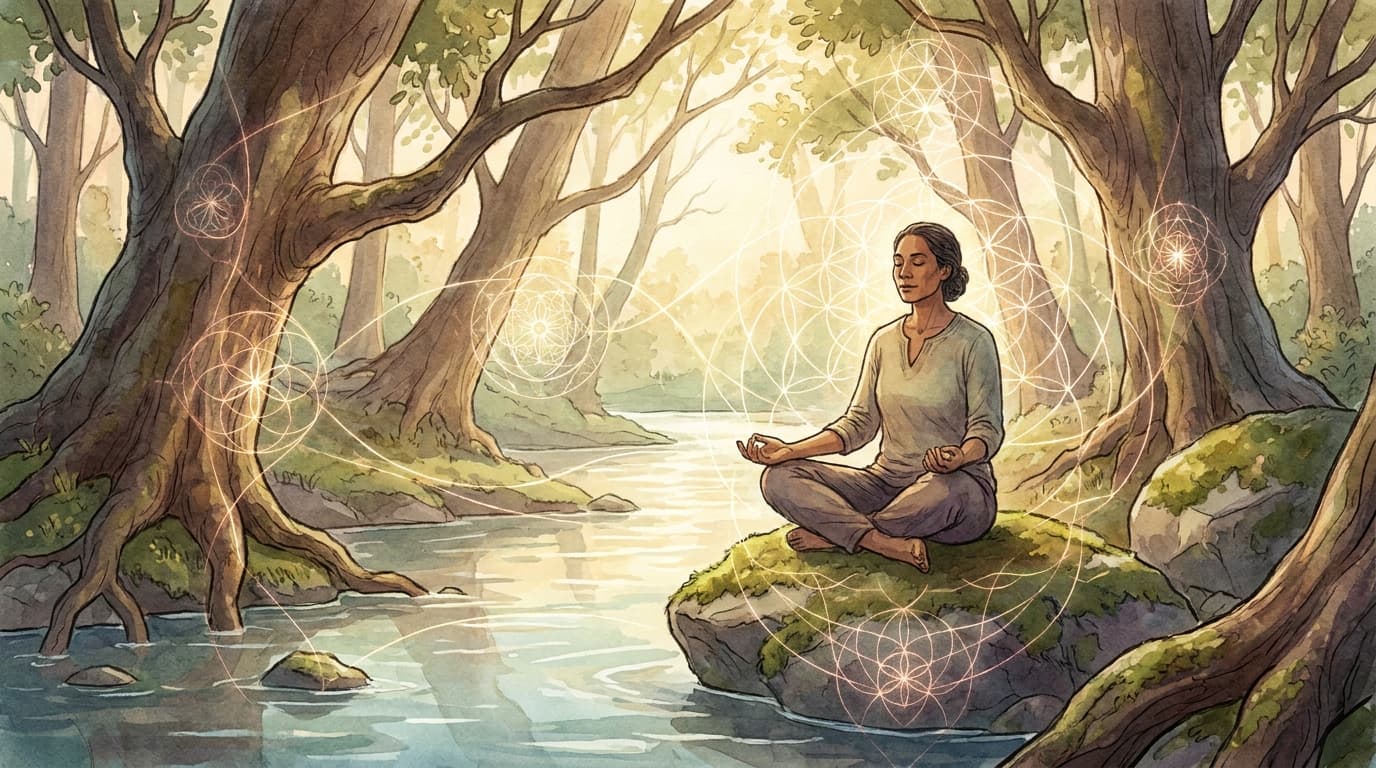
Understanding Spirituality in 2026: A Guide to Modern Beliefs and Practices
- spirituality
- religion
- wellness
- faith
- mindfulness
What Is ?
Spirituality can be defined generally as an individual's search for ultimate or meaning and purpose in life. Additionally, it can mean to seek out or search for personal growth, religious experience, belief in a supernatural realm or afterlife, or to make sense of one's own "inner dimension."
The key word here is individual. Modern usages tend to refer to a experience of a sacred dimension, and the "deepest values and meanings by which people live", often in a context separate from organized religious institutions. In modern times the emphasis is on subjective experience and the "deepest values and meanings by which people live", incorporating personal growth or soul transformation, usually in a context separate from organized religious institutions.
This does not mean spirituality is the same as religion. Spirituality often has to do with religion, but it doesn't have to. You might say, "I'm not religious; but I have a strong sense of spirituality," which might mean that you practice yoga or meditation, or you pray with a group, or you nurture your spirit by spending time in nature. Religions usually have defined beliefs, rituals, and guidelines; spirituality is more individual.
The Shift Away from Organized Religion
In recent decades, the relationship between young people and organized religion has changed dramatically. Involvement in formal religious activities—those organized through a church or place of worship—is much less common for young people today than it was a generation ago. Millennials and Gen Zers are much less likely to report attending worship services growing up. Less than half of millennials (45 percent) and Gen Zers (40 percent) say they attended church weekly.
However—and this is important—this decline in organized religion does not mean spirituality is disappearing. Surveys continue to show that even as formal religious declines, spiritual belief remains widespread.
Young Americans born in the late 1980s and early 1990s are moving away from organized religion. However, this shift doesn't mean a complete abandonment of belief in God. While young people may be their ties with institutional structures like churches or mosques, they continue to engage in spirituality and soul-searching on an individual level.
"Spiritual, But Not Religious"
One of the most important trends in 2026 is the rise of the "" identity. While "religion" is declining, "spirituality" is remaining as strong as ever. According to the Pew Research Center: 83% of Americans believe in God or a Universal Spirit. 86% of Americans believe humans have a soul or spirit beyond the physical body. 79% believe there is a spiritual world beyond the physical world. 57% believe non-human animals have spirits or spirit energies.
Young people are not rejecting spirituality—they are simply reshaping it. Gen Z's approach to religious and spiritual practice is called "," which is a term that describes the way they construct their faith by combining elements such as beliefs, identity, practices and community from a variety of religious and non-religious sources, rather than receiving all these things from a single system.
Think of it this way: instead of following one religion with all its rules and practices, young people today may combine meditation from Buddhism, prayer elements from Christianity, nature connection from Indigenous traditions, and mindfulness from secular wellness culture—creating their own unique spiritual path.
Spirituality and Mental Health
A major shift in 2026 is the recognition that spirituality directly affects mental and emotional well-being. Mental health care today increasingly requires clinicians to treat the whole person—not only mind and body, but also spirit. For many patients, spirituality and religion are central to identity, meaning-making, , and recovery.
Mental and emotional fitness, not just mental health, becomes a daily practice. Work and home life evolve: Workplace wellness expands, and home spaces become recovery sanctuaries. Nature-based healing, environmental wellness and community connection rise as core health pillars.
The connection is clear: when people feel they have meaning and purpose, their mental health improves. For individuals, spirituality offers tools for coping with anxiety, isolation, and uncertainty. Practices like meditation or mindfulness are increasingly recognized for their mental health benefits.
Body-Centered Spirituality: A 2026 Shift
One emerging trend in 2026 breaks away from purely mental or intellectual spiritual practice. In 2026, spiritual growth is moving from the "mind" to the "body." Traditional meditation is being replaced or supplemented by Nervous System Regulation. Practices like the "physiological sigh," cold water splashing, and humming are becoming essential daily rituals to move the body out of fight-or-flight and into a state where spiritual insight can actually land.
This reflects a growing understanding that the body and spirit are not separate. To feel spiritually , you must also feel physically safe and regulated (calm in your nervous system).
Digital Spirituality: Connection and Caution
Technology is reshaping spirituality in complex ways. On one hand, digital tools make spiritual resources accessible to millions. Digital spirituality has emerged since the early 1990s as an unforeseen outcome of the use of digital tools and virtual environments by spiritual seekers and practitioners. In the past decade, we have made increasing use of mobile phone and tablet apps for spiritual practice and spiritual development, online places of worship (cyber-churches), virtual meditation and prayer groups, live-streaming of sermons and spiritual study groups, online baptisms, weddings, and funerals, virtual reality games and films about the spiritual afterlife, and many more things to come.
The global market for spirituality-focused technology is experiencing significant growth. Spiritually-oriented apps like Headspace and Calm, each valued at over USD 2 billion, highlight strong consumer demand for digital solutions addressing mindfulness, meditation, and faith-based practices.
However, there is a risk. While technology offers many ways to grow spiritually, it's also important to use it wisely. Constant notifications and too much screen time can be distracting and work against the calming practices many are looking for.
This is why a new concept has emerged in 2026: Digital disconnection has become a spiritual status symbol. "Digital Privilege" refers to the ability to take a full 24-hour "" every week. This isn't just a break; it's viewed as a way to "reclaim the brain" and call back energy from the "digital hive mind."
Spirituality as a Counter to Modern Stress
In 2026, people are turning to spirituality to cope with the pressures of modern life. Pausing before reacting instead of pushing through. "Higher vibration" now looks less like constant growth and more like self-trust returning.
People are choosing environments that heal instead of harm, making spirituality a healthier alternative to parties. Despite being more digitally connected than ever, people feel lonelier. Traditional nightlife often involves loud music, alcohol-fueled conversations, and superficial interactions. While parties promise connection, they rarely deliver emotional depth.
Instead, Trends like bhajan clubbing, ecstatic dance, full-moon meditation events, and spiritual retreats combine music and movement with mindfulness – offering joy without chaos. These spaces allow people to feel seen, heard, and supported, which is increasingly rare in mainstream social settings.
The Role of Nature in Modern Spirituality
Nature is becoming central to spiritual practice in 2026. More than half (57%) of young people feel connected to a higher power and humanity and almost 70% feel connected to nature.
Instead of belonging to a single faith tradition, many young people weave together diverse practices — meditation, yoga, breathwork, journaling, or time in nature. Nature-based spirituality is particularly strong among younger generations, connecting environmental awareness with a sense of the sacred.
For many, sitting in nature—listening to water, observing trees, feeling the earth—has become as meaningful as any formal prayer or ritual.
Spirituality and Social Responsibility
An important aspect of 2026 spirituality is its connection to ethical action. At a societal level, this movement could reshape our understanding of community and ethics. Many young people see spirituality as intertwined with social and environmental responsibility.
This is a spirituality that does not separate personal inner work from outer impact. If you believe in , you care for others. If you seek meaning, you pursue justice. If you honor the sacred, you protect the environment.
Challenges and Cautions
As spirituality grows in popularity, some concerns have emerged. Spirituality can become superficial when treated as a lifestyle trend rather than a discipline of reflection and growth. Without depth or community, it may lose its potential.
Additionally, Not every struggle is spiritual. Not every feeling is a sign. Not every struggle is spiritual. A balanced approach recognizes that while spirituality is powerful, it is not a replacement for medical care, mental health treatment, or practical problem-solving.
What This Means for You
In 2026, spirituality is more accessible than ever—and more personalized. Whether you meditate, pray, spend time in nature, practice yoga, journal, pursue social justice, or simply seek meaning in your daily life, you are engaging in spirituality.
The shift away from "one-size-fits-all" religion toward individual spiritual paths reflects a larger truth: For many, spirituality is no longer about belonging to a religious institution but about cultivating personal connection, meaning, and balance.
Your spiritual path is your own. It may look nothing like anyone else's—and in 2026, that is not just accepted; it is celebrated.
Share
Test yourself
What is the main difference between religion and spirituality as described in this post?
Sources
Related articles
Similarities Across Major Religions
Despite their differences, the world's major religions share many fundamental beliefs and practices that reflect our shared human values. Learn about the common threads that connect Christianity, Islam, Judaism, Hinduism, and Buddhism.
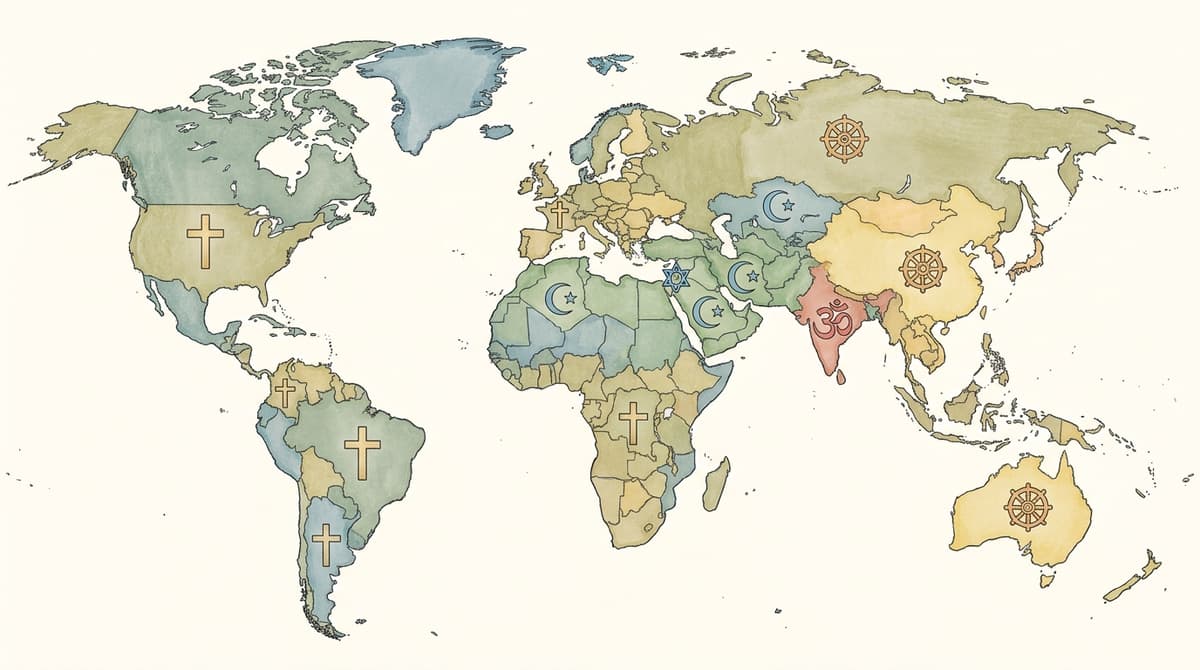
The Most Popular Religions in 2026
A look at the world's largest religions by number of followers in 2026, their core beliefs, geographic distribution, and how these numbers are changing.
Life After Death: Beliefs, Science, and Questions
Explore how different religions, scientific research, and philosophical perspectives explain what might happen after death—from heaven and hell to reincarnation and beyond.