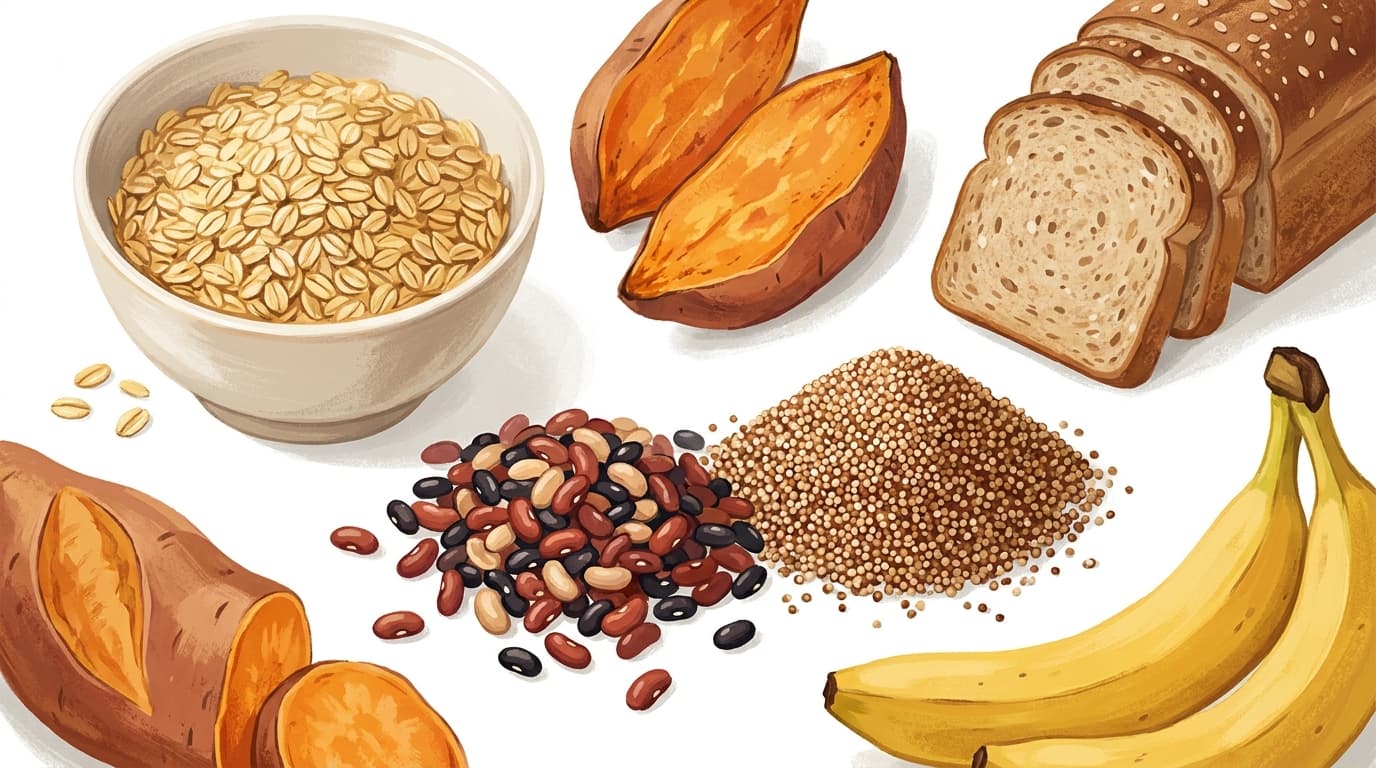
The Best Natural Sources of Carbohydrates for Your Health
- nutrition
- carbohydrates
- healthy eating
- whole foods
Understanding Carbohydrates
Carbohydrates often get blamed for weight gain and health problems. You might hear people say "carbs are bad" or "avoid carbs to lose weight." But this advice misses an important truth: the type of carbohydrate you choose to eat is more important than the amount .
Carbohydrates are the body's main source . Your brain, muscles, and organs all a sugar called for energy. When you eat carbohydrates, your body breaks them down into glucose, which then travels through your bloodstream to power your cells.
The key question is not whether to eat carbs, but which carbs to eat.
Simple vs. Complex Carbohydrates
Carbohydrates come in two main types: simple and complex.
Simple carbohydrates (also called simple sugars) are made of one or two sugar molecules. These increase your blood sugar quickly and can make it harder to manage your diabetes. Common sources of simple carbs include table sugar, honey, fruit juice, and syrup, which are often major ingredients of highly processed and packaged foods like soda, cookies, cakes, candies, and other foods with added sugars .
Complex carbohydrates take longer for your body to . These increase your blood sugar more slowly because they contain and other complex starches that take longer for your body to . Examples of complex carbs include starchy vegetables (white and sweet potatoes, peas, corn), legumes (beans, lentils), and whole grains .
Think of it this way: eating a candy bar gives you a quick burst of energy, then leaves you tired an hour later. Eating a bowl of oatmeal gives you steady energy for several hours. That is the difference between simple and complex carbs.
Why Natural Sources Matter
The healthiest sources of carbohydrates—unprocessed or minimally processed whole grains, vegetables, fruits and beans—promote good health by delivering vitamins, minerals, fiber, and a host of important phytonutrients . Phytonutrients are natural compounds (that is, chemicals) found in plants that help protect your health.
, unhealthier sources of carbohydrates include white bread, pastries, sodas, and other highly processed or foods. These items contain easily digested carbohydrates that may contribute to weight gain, interfere with weight loss, and promote diabetes and heart disease .
When grains are refined (processed), manufacturers remove the outer layers that contain most of the fiber, vitamins, and minerals. What remains is mostly starch—pure carbohydrate with very little nutrition.
The Best Natural Carbohydrate Sources
Whole Grains
Healthy, whole grains such as whole wheat bread, rye, barley and quinoa are better choices than highly refined white bread or French fries .
Whole grains include all three parts of the grain : the bran (outer layer with fiber and B vitamins), the germ (nutrient-rich core), and the endosperm (starchy middle). If you eat a whole grain food, it contains the bran, germ, and endosperm so you get all of the nutrients that whole grains have to offer. Because whole grains contain the entire grain, they are much more nutritious than refined grains .
Examples of whole grains:
- Brown rice and wild rice
- Whole wheat bread and pasta
- Oats and oatmeal
- Quinoa
- Barley
- Bulgur wheat
- Farro
Oats are an incredibly healthy whole grain and a great source of many vitamins, minerals, and antioxidants . Oats contain a special type of fiber called beta-glucan, which can help lower levels.
Cooked quinoa contains 70% carbs, making it a high carb food. However, it's also a good source of protein and fiber. Quinoa is rich in many minerals and plant compounds and has been linked to a variety of health benefits, including improved blood sugar management and heart health . Additionally, quinoa is naturally gluten-free.
How to identify whole grains: When eating grains, choose mostly whole grains. Whole grains are foods like whole-wheat bread, brown rice, whole cornmeal, and oatmeal. They offer lots of nutrients that your body needs, like vitamins, minerals, and fiber. To figure out whether a product has a lot of whole grain, check the ingredients list on the package and see if a whole grain is one of the first few items listed .
Starchy Vegetables
Starchy vegetables include potatoes (preferably with the skin), green peas, corn and winter squash like butternut or spaghetti squash .
Among starchy vegetables, sweet potatoes stand out for their exceptional nutrition. Sweet potatoes are nutritious, packing a good amount of vitamin A, vitamin C, and manganese into each serving. They also have anticancer properties and may promote immune function and other health benefits .
One medium sweetpotato provides about 100 calories, with 2 grams of protein, 25 grams of carbohydrates and 4 grams of fiber . The bright orange color comes from beta-carotene, which your body converts to vitamin A—a nutrient essential for vision, skin health, and immune function.
Nowadays, sweet potatoes are recognized as a highly nutritious and useful food for the prevention of chronic diseases, mainly due to its content of dietary fiber, naturally occurring sugars, protein content, vitamins A and C, , iron, and calcium, and its low amount of fat (mainly saturated fat), sodium, and cholesterol .
Regular potatoes also offer benefits. While often criticized, potatoes, especially when cooked and cooled, contain resistant starch, which supports gut health and improves insulin sensitivity. Potatoes are also carbohydrate-rich foods, low in fat and provide essential nutrients. They are particularly high in vitamin C and serve as a good source of several B vitamins and potassium. Additionally, the skins offer substantial dietary fiber, contributing to digestive health .
Legumes (Beans, Lentils, and Peas)
Legumes are an inexpensive source of protein, vitamins, complex carbohydrates, and fiber .
Starchy beans and legumes include black beans, lima beans, chickpeas, split peas and lentils . These foods are exceptional sources of natural carbohydrates because they provide protein and fiber along with their carbs.
One serving of legumes, which is one-half cup, provides about 115 calories, 20 g of carbohydrate, 7–9 g of fiber, 8 g of protein, and 1 g of fat . This combination of nutrients makes you feel full and satisfied.
Lentils have a glycemic index (GI) of around 28, while most beans fall between 30 and 40. Since foods with a GI under 55 are considered low, both lentils and beans are classified as low-GI foods . A low glycemic index means these foods cause blood sugar to rise slowly and steadily, not in a sudden spike.
Why legumes are exceptional:
Chickpeas are an excellent source of plant-based protein and contain many vitamins and minerals. Eating chickpeas has been linked to benefits for heart and digestive health, as well as potential cancer prevention .
Lentils are a great source of vegetarian protein and iron. Eating them may reduce blood sugar levels compared with some other foods that are high in carbs .
Beans are an excellent source of slowly digested carbohydrates and provide a healthy dose of protein .
Legumes contain resistant starch, a special type of carbohydrate. Resistant starch is not digested and enters the colon where it works similarly to fiber by promoting bulky stool and acting as a prebiotic food for beneficial bacteria like Bifidobacteria . This means legumes feed the good bacteria in your gut.
Fruits
Any and all kinds of fruit and vegetables you like count as healthy carbohydrate sources.
Bananas are a popular fruit. One large banana (136 grams) contains about 31 grams of carbs, either in the form of starches or sugars. Bananas are also high in potassium and vitamins B6 and C, and they contain several beneficial plant compounds. Thanks to their high content of potassium, bananas may help lower blood pressure and improve heart health .
Berries, apples, oranges, and other whole fruits provide natural sugars along with fiber, vitamins, and antioxidants. The fiber in whole fruit slows down sugar absorption, preventing the blood sugar spikes you get from fruit juice or sugary snacks.
How Much and How to Eat
On average, people should get 45 to 65% of their calories from carbohydrates every day. On the Nutrition Facts labels, the Daily Value for total carbohydrates is 275 g per day. This is based on a 2,000-calorie daily diet .
A good rule of thumb is that about one-quarter of your meal should be composed of whole grains or starchy vegetables . Fill half your plate with non-starchy vegetables (like broccoli, leafy greens, and peppers), one quarter with whole grains or starchy vegetables, and one quarter with protein foods.
Practical Tips
Choose whole over refined:
When you go grocery shopping, opt for whole grain varieties of high carb foods like bread, pasta, and rice. This will boost your intake of important nutrients, including fiber, vitamins, and minerals .
Read ingredient lists: Look for products where a whole grain appears as the first or second ingredient. Terms like "100% whole wheat," "whole oats," or "brown rice" signal that you are getting the entire grain.
Combine carbs with protein and fat:
Eating a meal that combines carbs, fat and protein may lead to a better glucose response . For example, eat your oatmeal with nuts and Greek yogurt, or pair your brown rice with beans and avocado.
Include variety:
Explore grains from around the world, like quinoa, farro, bulgur wheat, barley, and millet. They cook much in the same way as rice and pack a nutritious punch along with extra flavor .
What to Limit
While natural carbohydrate sources provide essential nutrition, some carbs are best eaten only occasionally.
Processed carbs are best left for occasional indulgences—birthday cake at a party, for example, or a slice of pizza here and there. You don't need to avoid processed carbs completely. That's not sustainable for most people to keep up long-term. But keep your portion sizes reasonable, and try not to have them too often .
Try to avoid foods that have a lot of added sugar. These foods can have many calories but not much nutrition. Eating too much added sugar raises your blood sugar and can make you gain weight .
Examples of processed, refined carbs to limit:
- White bread, white rice, white pasta
- Sugary breakfast cereals
- Cookies, cakes, pastries
- Candy and chocolate bars
- Soda and sweetened drinks
- Chips and crackers made with refined flour
The Bottom Line
It's a myth that all carbs are unhealthy. In fact, many of the healthiest foods are high in carbohydrates .
The best natural sources of carbohydrates are:
- Whole grains like oats, quinoa, brown rice, barley, and whole wheat
- Starchy vegetables like sweet potatoes, regular potatoes, corn, and peas
- Legumes like beans, lentils, and chickpeas
- Fruits like bananas, berries, apples, and oranges
Some carbs are a source of important nutrients, like fiber and antioxidants. Healthy carbs come from natural foods and provide vitamins and nutrients as part of a healthy diet .
Instead of avoiding all carbs, be choosy. Stick to natural, minimally processed sources. Your body needs carbohydrates to function—give it the kind that come packed with nutrition.
Share
Test yourself
According to the post, which type of carbohydrate is healthier: complex or simple?
Sources
Related articles

Building a Healthy Lifestyle for the Modern Man
A balanced healthy lifestyle for men today goes beyond the gym. Learn how exercise, sleep, nutrition, and mental wellbeing work together to build lasting strength and resilience.

Understanding Spirituality in 2026: A Guide to Modern Beliefs and Practices
Spirituality in 2026 is shifting toward personal, flexible practices that blend technology with timeless traditions. Young people are choosing individual spiritual paths over formal religion while seeking meaning and connection.

How to Manage Risk for the Everyday Man
Learn practical strategies to identify, understand, and manage the financial and life risks that affect your family and future, from emergency savings to insurance and smart budgeting.