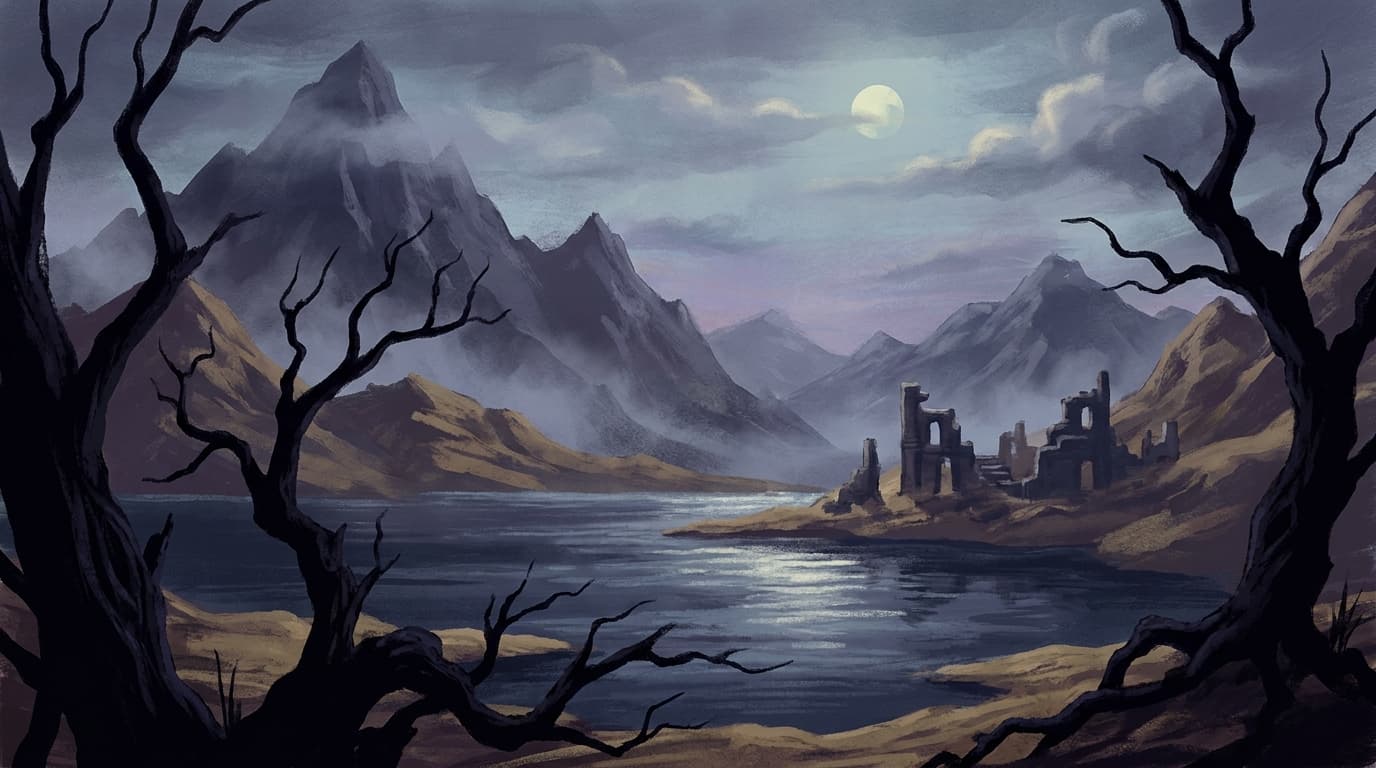
Urban Legends from Guerrero, Mexico
- mexican-folklore
- guerrero
- legends
- culture
The Geography and Spirit of Guerrero
Guerrero, a state located in southern Mexico, is known for its beautiful beaches, rich culture, and fascinating legends.
It borders Morelos and Puebla to the north, the Pacific Ocean to the southwest, Oaxaca to the southeast, and the Balsas River to the northeast. Its surroundings are mountains, hills, and lagoons. This landscape is far more than scenery—it is the foundation of Guerrero's legendary tradition.
Its structure and relief make the region an ideal setting for the development of fables that support Mexican history and the thoughts of its inhabitants. The mountains, water systems, and remote areas create natural stages where legend and mystery can thrive. When you understand Guerrero's geography, you begin to understand why its people tell such stories, and why those stories continue to hold power.
La Llorona: The Weeping Woman
Among all Mexican legends, perhaps none is as famous or as deeply in Guerrero as the story of La Llorona. The story of La Llorona is one of the most well-known and terrifying tales in Mexico. It is said that during the Mexican colonial era, a woman named María was abandoned by her husband and, in a and jealousy, drowned her own children in the river. Upon realizing what she had done, María died in anguish. However, her spirit remained trapped on Earth, and she is seen crying and searching for her children.
Different versions of the story exist across regions, and they emphasize different moments of tragedy. In many variations of the tale, Maria's husband was an unfaithful or abusive man who treated their two sons more affectionately than he did his wife. Other retellings say that her husband may have left her for a wealthier or lighter-skinned woman. Out of jealousy, rage, or despair, she is said to have lured her sons to a nearby river and drowned them before drowning herself after realizing what she had done.
What happens after death is central to her haunting. When her soul applied for admission to heaven, el Señor refused her entry. "Where are your children?" He asked her. Ashamed, she confessed she did not know. "Go and bring them here," the Lord said. "You cannot rest until they are found." And ever since, La Llorona wanders along streams at night, weeping and crying for her children—"Ay, mis hijos!"
Physical Appearance and Encounters
The way people describe seeing La Llorona varies, but certain details repeat across accounts. Some accounts describe La Llorona as having long hair and wearing a hooded cape or a veil. Others describe her as being young and pretty, being dressed entirely in black or white, or having the bones of her dead children embedded in her backbone.
She usually dresses in black. Her face is sometimes that of a horse, but more often horribly blank, and her long fingernails gleam like polished tin in the moonlight.
Her heart-wrenching wails are heard at night, and it is believed that her spirit can take disobedient children. Parents have used this legend for centuries not merely to frighten children, but to encourage good behavior. The warning—, do not wander after dark, treat your family with respect—carries practical wisdom wrapped in supernatural fear.
La Tlanchana: The Water Spirit
On the shores of the small lake called Laguna de Huamuxtitlan in the Mexican state of Guerrero there is a story of a Tlanchana emerging from the water and calling a young man from the lake. The laguna has been seen as a sacred and spiritual place for centuries.
La Tlanchana is a figure with deep roots in Mesoamerican tradition. The Tlanchana, also known as the Anchane, is a freshwater figure of the Matlatzinca people. Her appearance is that of a woman with the lower body of a snake, and is oftentimes wearing a crown, necklaces, and aquatic creatures strung around her waist.
Due to European influence, later depictions portray her as a mermaid with a fish tail in the place of a serpent's.
Unlike La Llorona, whose motivation is grief and searching, La Tlanchana is ruled by mood and possession. Legend has it that this deity had control over the entire region with her beauty, which dazzled anyone. Although her face, torso, and arms were human, instead of legs, she had a snake tail. It is said that the locals who saw her, hidden behind the tule trees that grew in the lagoon, beheld the beauty of this naked woman who wore a crown and several necklaces, as well as a belt adorned with fish, crayfish, and axolotls.
The Two Faces of La Tlanchana
What makes La Tlanchana particularly dangerous is her unpredictability. But the Tlanchana was , possessive, and vengeful. When she was in a good mood, she would flaunt her black snake tail, which was something the fishermen eagerly awaited, as the movement of her tail augured abundance of fish in their nets.
However, generosity and cruelty are two sides of the same being. However, at other times, the queen would transform her tail into a pair of legs and emerge from the water to seek out the man who had seen her, with the intention of leading him to the middle of the lake where she would drown him.
Unlike the Acapaxapo, the Tlanchana was not purely benevolent. If rejected, she would wrap around human men and drag them underwater to drown.
This reflects the dual nature of water itself—life-giving and deadly, calm and turbulent. In Guerrero's lakes and rivers, that balance is never guaranteed.
The Chonchón: The Winged Terror
One of Guerrero's most famous legends is that of the "Chonchón," a supernatural being who transforms into a winged creature with glowing red eyes. According to legend, the Chonchón can fly at night and those who dare challenge him.
The Chonchón is less well-known outside Mexico than La Llorona or La Tlanchana, but no less feared by those who believe in it. It represents a different class of threat—not a ghost bound to a place by tragedy, nor a water spirit tied to lakes, but a creature born from witchcraft and that moves freely through the night.
Those who encounter the Chonchón must be wary. The Chonchón can fly at night and haunt those who dare challenge him. The legend serves as a warning: not all threats are visible, not all dangers come with a story of human tragedy, and not all of Guerrero's supernatural beings can be reasoned with or understood through conventional morality.
The Role of Oral Tradition
Mexican folktales are rich in traditional myths and legends that have been passed down from generation to generation for centuries. In the state of Guerrero, Mexico, there are several very curious legends that are part of local folklore. These stories are not artifacts in a museum; they are living traditions. These are just a few of the legends of Guerrero that are part of Mexican folklore and continue to haunt the nights of local residents.
The power of these legends lies in their . Each generation adds details, reshapes the stories to fit new circumstances, and passes them along—sometimes to frighten, sometimes to teach, and sometimes simply to maintain a connection to the land and its history. In Guerrero, where mountains hold ancient secrets and water flows through valleys of memory, the legends are never truly old. They are as present as the next night, as real as the next person brave or foolish enough to walk alone by a river after dark.
Why These Legends Matter
Urban legends from Guerrero are not mere entertainment. They values, warn against danger, and honor the indigenous heritage that still shapes the region. These stories are now very important to Mexican culture as they have been handed down from generation to generation and grown with time.
When you learn these stories, you learn something about the people of Guerrero—their respect for water and nature, their awareness of moral consequence, and their belief that the boundary between the visible and invisible worlds is thinner than it appears. In the mountains and lakes of Guerrero, the past is never past. It walks beside you. It calls to you from the water. And in the darkness, it might just be waiting.
Share
Test yourself
What is the primary setting for the legend of La Llorona in Guerrero?
Sources
Related articles

Similarities Across Major Religions
Despite their differences, the world's major religions share many fundamental beliefs and practices that reflect our shared human values. Learn about the common threads that connect Christianity, Islam, Judaism, Hinduism, and Buddhism.
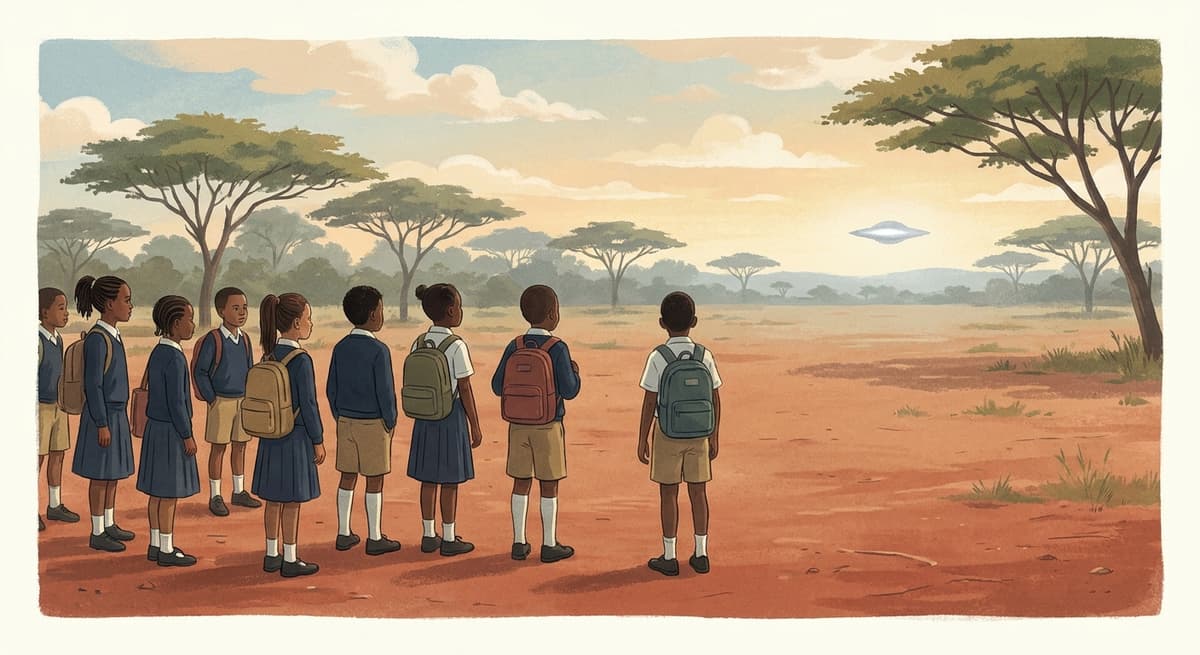
The Ariel School UFO Incident: When 62 Children in Zimbabwe Saw Something Unexplained
In 1994, sixty-two children at a school in Zimbabwe reported seeing a silver craft land near their playground and beings emerge from it—a story that still divides believers and skeptics three decades later.

Bob Lazar and Area 51: The Story That Made a Secret Base Famous
In 1989, a man named Bob Lazar claimed he worked on alien spacecraft at a secret U.S. government base. His story made Area 51 world-famous, but investigations found serious problems with his claims.